

What comes to mind when you fly Cebu Pacific? Or go malling at Robinsons? Or munch your favorite Jack and Jill Piattos, Chippy and Chicharron ni Mang Juan? Savor Nissan Cup Noodles and Instant Mami? Indulge in Payless Pancit Canton?
The Gokongweis, right? Everybody knows the family owns these companies and more! In fact they are renowned in business circles worldwide for JG Summit Holdings, Inc., reputedly one of the largest conglomerates in the Philippines that is also into telecommunications, power generation, real estate, financial services, petrochemicals, food, beverage, even livestock farming.
But what not everybody knows is that the patriarch, John Gokongwei, Jr., went through a horrible roller-coaster ride, setting his sight on his business plans as he started out selling anything from soaps and candles to peanuts in makeshift stores at the local palengke in Cebu back in the day.
He had no recourse.
Rich kid
He recalls: “I was born to a rich Chinese-Filipino family. I spent my childhood in Cebu where my father owned a chain of movie houses, including the first air-conditioned one outside Manila.
“I was the eldest of six children and lived in a big house in Cebu ‘s Forbes Park. A chauffeur drove me to school every day as I went to San Carlos University. I topped my classes and had many friends. I would bring them to watch movies for free at my father’s movie houses.”
Then something went wrong.
“When I was 13, my father died suddenly of complications due to typhoid. Everything I enjoyed vanished instantly. My father’s empire was built on credit. When he died, we lost everything-our big house, our cars, our business-to the banks. I felt angry at the world for taking away my father, and for taking away all that I enjoyed before. When the free movies disappeared, I also lost half my friends,” he went on to share during a rare speech before the 20th Philippine Advertising Congress held at the Subic Bay Exhibition and Convention Center (SBECC) years back
Came a day when he had to walk two miles to school for the very first time; and it broke him.
“I cried to my mother, a widow at 32. But she said: ‘You should feel lucky. Some people have no shoes to walk to school. What can you do? Your father died with 10 centavos in his pocket. So, what can I do? I worked,” he said.
Slowly poverty crept in. His mother sent his siblings to China. She eventually had to sell her jewelry.
Palengke
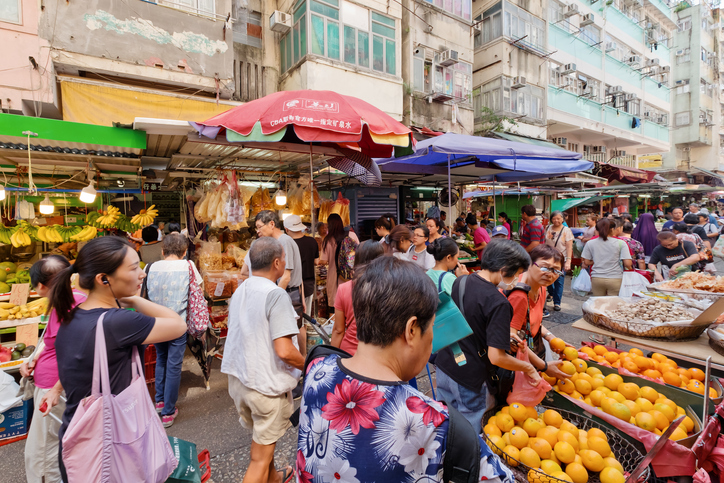
“When that ran out, we sold roasted peanuts in the backyard of our much-smaller home. When that wasn’t enough, I opened a small stall in a palengke (market),” Gokongwei said.
And there began his journey of small steps coming to leaps and bounds. He was 15.
“I chose one among several palengkes a few miles outside the city because there were fewer goods available for the people there. I woke up at five o’clock every morning for the long bicycle ride to the palengke with my basket of goods. There, I set up a table about three feet by two feet in size. I laid out my goods-soap, candles, and thread-and kept selling until everything was bought. Why these goods? Because these were hard times and this was a poor village, so people wanted and needed the basics: soap to keep them clean, candles to light the night, and thread to sew their clothes,” shared Gokongwei, now 93.
He said he made Php20 profit each day. It was 1941 – when Pearl Harbor was bombed by the Japanese who then occupied the Philippines.
“The pesos I made in the palengke were the pesos that went into building the business I have today. After this experience, I told myself, ‘If I can compete with people so much older than me, if I can support my whole family at 15, I can do anything!’” said Gokongwei.
Business acumen

In 1943, Gokongwei levelled up and expanded his business by trading goods between Cebu and Manila. “From Cebu, I would transport tires on a small boat called a “batel”. After traveling for five days to Lucena, I would load them into a truck for the six-hour trip to Manila. I would end up sitting on top of my goods so they would not be stolen! In Manila, I would then purchase other goods from the earnings I made from the tires, to sell in Cebu,” he shared.
When the war ended, Gokongwei saw an opportunity and, with the help of his brother Henry, opened Amasia Trading which imported onions, flour, used clothing, old newspapers and magazines, and fruits from the United States. He was 20 and was well on his way to becoming a tycoon.
There were challenges but as the cookie crumbled, the rest is history. There was Blend 45 coffee; the battle for a seat on the San Miguel Board of Directors; the “low cost, great value” Cebu Pacific against the flag carrier, Philippine Airlines; and many other business lessons that has spawned JG Summit Holdings and have it a made deal.
Among these are Universal Robina Corporation (URC), one of the largest food and beverage companies in the Philippines; Robinsons Malls; Robinsons Land Corp.; Digitel and Sun Cellular, which was acquired by Philippine Long Distance Telephone (PLDT), where as part of the deal, JG Summit Holdings would have a 12% share in PLDT. JG Summit also runs Summit Hotels and Go Hotels, as well as Robinsons Bank Corp.
The URC also produced comfort snack foods that Pinoys have grown to love, among them, the all-time favorite, Jack and Jill line which includes Piattos, Chippy, Chicharron ni Mang Juan, Granny Goose Tortillos, Nova, Mr. Chips and more. The company also produces Nissan Cup Noodles and Instant Mami as well as Payless Pancit Canton.
Looking back, Gokongwei put it this way: “As a boy, I sold peanuts from my backyard. Today, I sell snacks to the world. I want to see other Filipinos do the same.”