
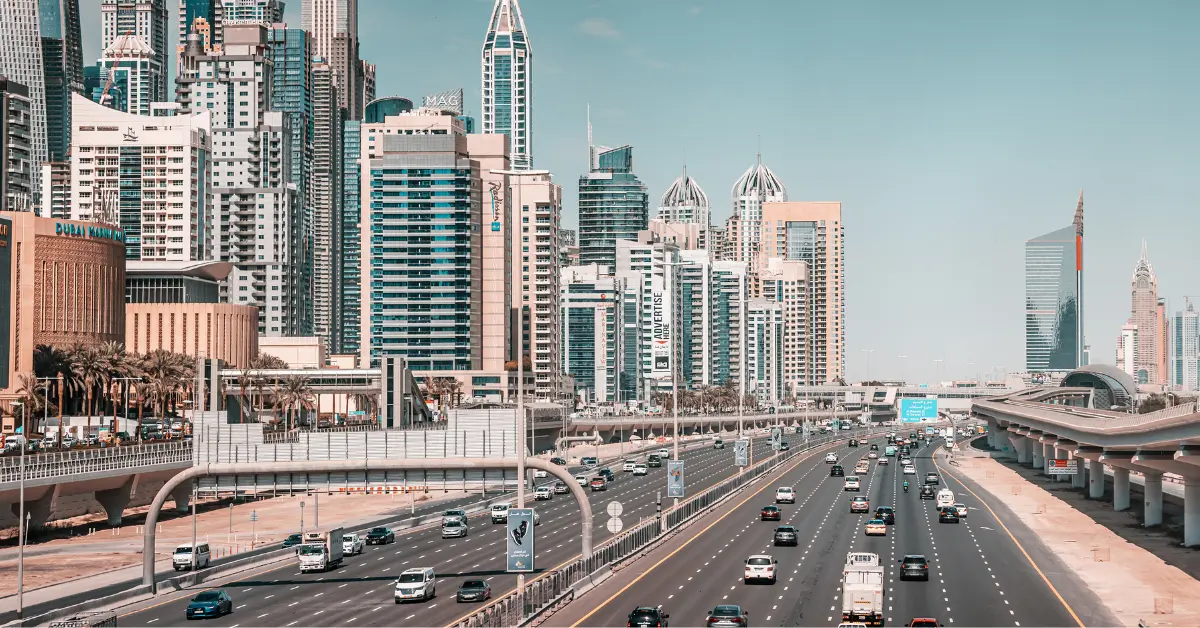
Motorists across the UAE spent more time in traffic in 2025 compared to last year, losing up to 45 hours on the road, according to the Inrix 2025 Global Traffic Report.
The report showed that commuters in Dubai lost 45 hours this year, 10 hours more than in 2024, while residents in Abu Dhabi lost 29 hours, Umm Al Quwain 28 hours, Al Ain 17 hours, and Fujairah eight hours. The increase is attributed to population growth and a rise in the number of vehicles.
The UAE’s population has grown by two million over the past five years, reaching 11.48 million as of November 2025, according to Worldometers data.
To address rising congestion, UAE authorities are investing billions of dirhams in transport infrastructure. In November, Suhail Al Mazrouei, Minister of Energy and Infrastructure, announced a Dh170-billion package of national road and transport projects to be completed by 2030, aimed at easing traffic and improving mobility.
Key measures include:
• Expanding federal roads from 19 to 33 lanes in each direction.
• Adding six lanes to Etihad Road (three each way), increasing capacity by 60 percent.
• Expanding Emirates Road to 10 lanes, boosting capacity by 65 percent and reducing travel time by 45 percent.
• Widening Sheikh Mohammed bin Zayed Road to 10 lanes, raising capacity by 45 percent.
• Studying construction of a fourth federal highway spanning 120 km with 12 lanes and a daily capacity of 360,000 trips.
Dubai alone has invested Dh175 billion in transport infrastructure over the past 20 years, including the Dubai Metro, Dubai Tram, over 25,000 lane-kilometres of roads, 560 km of cycling tracks, 1,050 bridges and tunnels, and 177 pedestrian crossings. A McKinsey & Company study noted that these projects reduced fuel and time costs by Dh319 billion.
The increase in traffic has also slowed commute speeds. Peak travel speeds in Dubai dropped from 33 mph in 2023 to 32 mph in 2024, and 29 mph in 2025. Morning commute speeds into downtown fell from 23 mph in 2023 to 21 mph in 2025.
Globally, Istanbul, Turkey, topped the list of most-congested urban areas for the second consecutive year, with motorists losing 118 hours, a 12 percent increase from 2024. Other highly congested cities include Mexico City, Chicago, New York City, Philadelphia, Cape Town, London, Paris, Jakarta, and Los Angeles.