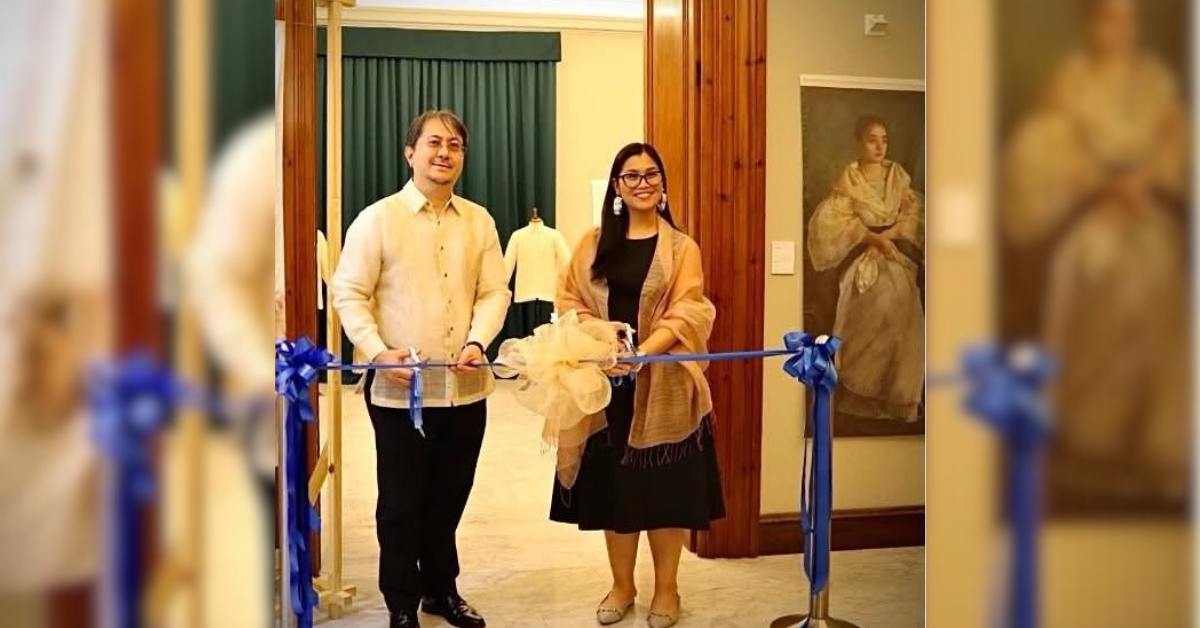
Following the success of the Bianchi Contaminati Fashion Show, which reimagined Philippine textiles through contemporary Italian design, the Philippine Embassy in Rome, in partnership with the National Museum of the Philippines (NMP), unveiled the Aklan Piña Handloom Weaving Exhibit at the Embassy’s chancery.
The exhibit, which runs from September 15 to October 15, serves as a companion cultural event to the fashion show and highlights the Philippines’ centuries-old weaving tradition.
The opening reception cast a spotlight on the artistry of piña weaving from Aklan, a craft recognized globally when UNESCO inscribed it in 2023 on its Representative List of the Intangible Cultural Heritage of Humanity. More than a celebration of delicate fabrics, the exhibit underscores the resilience of Filipino weavers and the Embassy’s continued commitment to promoting Philippine heritage on the international stage.
On display is a collection of finely woven piña textiles, weaving tools, and garments, each piece reflecting the depth of skill and creativity that has been passed down through generations.
At the opening ceremony, Philippine Ambassador to Italy Neal Imperial emphasized the fabric’s enduring place in Filipino identity.
“Piña, together with other native fabrics such as jusi, has long conveyed deeply rooted Filipino values of decency, propriety, and moral uprightness—reflected in the way these garments shaped the sartorial traditions of our society,” he said. He further expressed hope that the exhibit would spark wider appreciation for piña, recognizing it not only as a textile but as a cultural medium for dialogue and exchange.
Adding depth to the program, the NMP conducted two embroidery workshops in conjunction with the exhibit. The first, held on September 15, welcomed Italian student designers eager to explore traditional Philippine techniques, while the second, on September 16, engaged second- and third-generation Filipinos in Italy. Both sessions offered a hands-on experience that blended cultural appreciation with technical knowledge while also encouraging dialogue across communities.
Participants were also treated to a screening of Segunda Pulo: Filipino Heritage Through the Artisans’ Hands, a documentary by Filipino filmmaker Seth Gagahina that pays tribute to the master craftsmen behind Philippine textiles. The film highlighted the painstaking artistry involved in weaving piña, reinforcing the exhibit’s central message. Alona Cochon