
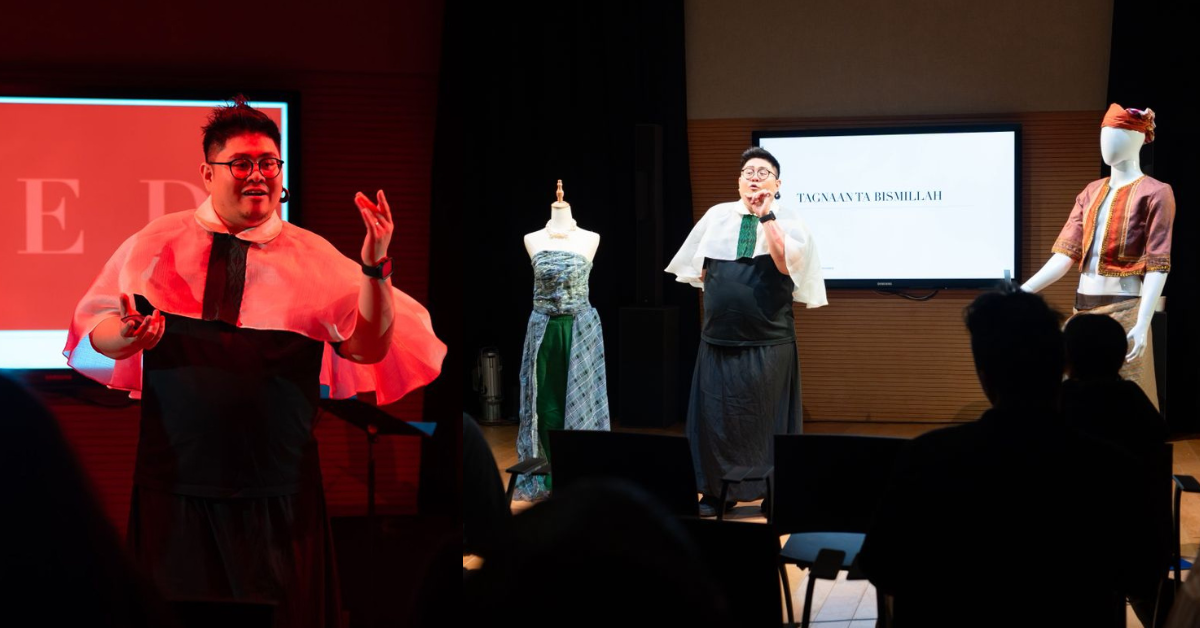
A Filipino theatre technical director has brought the ingenuity and warmth of Philippine artistry to the world, standing out as the only Filipino and Asian lecturer at the World Stage Design (WSD) in Sharjah—often described as the “Expo of the performing arts.”
Daniel Cortezano, widely known in the industry as D Cortezano, joined global design leaders at the prestigious performance design exhibition held Oct. 18–25, offering a glimpse into the Filipino approach to stage design and production.
“To stand on that global stage as the only Filipino and Asian masterclass lecturer was to carry an entire archipelago of stories with me. I wanted the world to see that Filipino art is not derivative — it leads with empathy, imagination, and light,” Cortezano, a resident technical director of Areté at Ateneo de Manila University and a faculty member of Ateneo Fine Arts and Guang Ming College, shared in an interview with The Filipino Times.
“Representing the Philippines at WSD Sharjah meant bringing our warmth to an international community that is ready to listen to our voice,” he added.
Rediscovering Shakespeare through Filipino lens

His masterclass, “Colour Dramaturgy: The Colours of Sintang Dalisay,” highlighted how the light in the Philippines carries emotion and spirituality, using color to express actions and sentiments such as praying, mourning and loving.
“It was a Filipino lens through which the world could rediscover Shakespeare,” he said.
Drawing inspiration from Mindanao, he illustrated the rhythm of the igal, the shimmer of the panolong, and the gentle glow of bamboo, turning Filipino stage design into a participatory experience.
“Being Filipino means creating from community. Our art is always participatory — it breathes with the audience,” he added.
With a career spanning theatre, live events, and concerts across Southeast Asia and Europe, Cortezano said his creative style is deeply rooted in everyday Filipino life, such as the sunlight filtered through bamboo, candles glowing during fiestas, and fireflies dancing in rice fields, resulting in designs that feel lived-in and full of soul.
On what inspires him most, he added: “My students and collaborators. Their curiosity reminds me that art isn’t about arrival — it’s about process. Every time I see them experiment with light, movement or texture, I’m reminded why we do this: to connect. The Filipino creative spirit thrives on shared labor and joy. That keeps me grounded.”
Representing the Philippines
Cortezano hopes this representation will inspire the next generation of Filipino designers and artists to aim for global platforms.
“I hope it tells them that the world stage is not out of reach — it’s waiting. Our stories, our craftsmanship, our worldview deserve to be seen and heard,” he said. “The future of global design is plural, and Filipino artists have the sensitivity and intelligence to help define it. We don’t have to imitate anyone; our cultural memory is enough to illuminate the world.”
He added a message for Filipinos in the UAE and around the world pursuing creative careers: “Keep creating wherever you are. Carry your heritage with quiet pride and let it shape your work. The world doesn’t just need more artists — it needs Filipino artists: brave, compassionate and inventive.”