
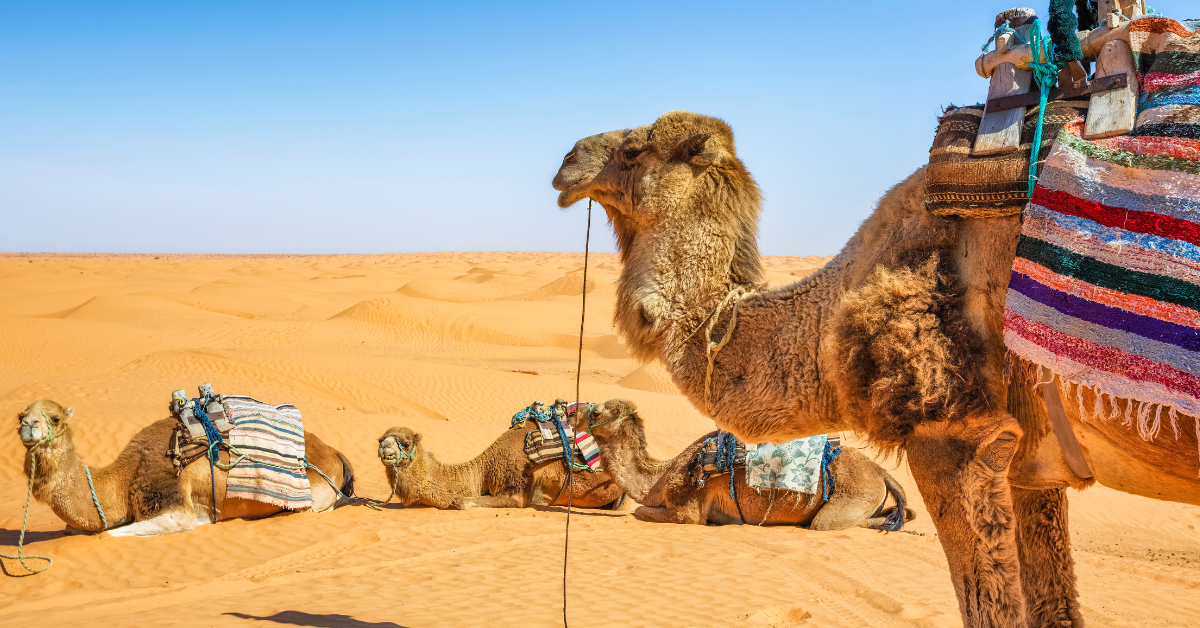
Saudi Arabia plans to introduce official passports for camels as part of efforts to better regulate and manage one of the kingdom’s most culturally and economically important assets.
The Ministry of Environment, Water and Agriculture said this week that the initiative aims to improve oversight of camel ownership and boost “productivity and efficiency in the sector” through a centralized and reliable database.
State-backed broadcaster Al Ekhbariya reported that the documents will be used to regulate the sale, transport, and trade of camels, while also protecting owners’ rights and simplifying proof of ownership.
Government figures released in 2024 estimate that Saudi Arabia is home to about 2.2 million camels. Long vital as a means of transport, camels remain deeply embedded in Saudi society today as symbols of heritage, prestige, and wealth.
In recent years, camels have also become central to a lucrative breeding and competition industry, particularly at major events such as the King Abdulaziz Camel Festival, where prize-winning animals can fetch hundreds of thousands of dollars.
The growing commercial value has pushed authorities to tighten oversight, especially after scandals involving cosmetic manipulation of camels in beauty contests. Practices such as injections and fillers to enhance lips, noses, and humps have been banned, with violators facing fines and disqualification.
Officials said the passport system is part of a broader push to modernize agricultural governance while preserving traditional industries, using documentation, data, and traceability to manage practices once governed largely by custom and oral records.