
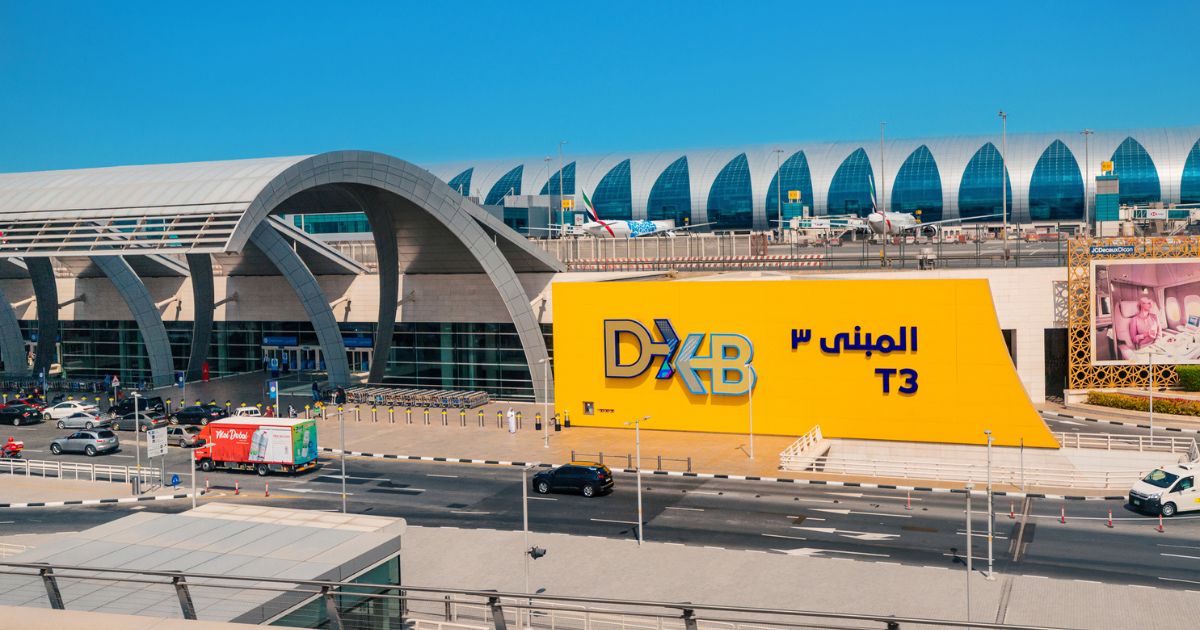
Dubai International Airport (DXB) recorded its busiest first half on record, welcoming 46 million passengers between January and June 2025.
The figure marks a 2.3 percent increase from the same period last year, despite temporary airspace disruptions in May and June.
India remained DXB’s top country market with 5.9 million passengers, followed by Saudi Arabia with 3.6 million, the United Kingdom with 3.0 million, Pakistan with 2.1 million, and the United States with 1.6 million.
Meanwhile, London led as the busiest city destination with 1.8 million passengers. Other top city routes included Riyadh with 1.5 million, Mumbai with 1.2 million, Jeddah and New Delhi with 1.1 million each, and Istanbul with 982,000.
96 million passengers projected for 2025
The airport handled 222,000 flights during the first six months of the year. Monthly passenger traffic averaged 7.7 million, while daily volumes reached 254,000. January posted the highest monthly total, setting a new record with 8.5 million passengers.
In the second quarter alone, 22.5 million travelers passed through DXB, reflecting a 3.1 percent increase year-on-year. April was the busiest month in the quarter with 8 million passengers.
Dubai Airports CEO Paul Griffiths said DXB is on track to handle 96 million passengers by the end of 2025.
“DXB’s continued growth through a period of regional challenges highlights the strength of Dubai and the UAE, the agility of our operations, and the commitment of our airport community. The oneDXB mindset once again enabled us to manage disruption while elevating the guest experience and ensuring seamless global connectivity,” he said through WAM.
He added that traffic is expected to rise further in the second half of the year, with an increase during the late-summer travel peak and a full winter season of global events.
The Dubai Airshow 2025 is also expected to boost activity and highlight advancements in aviation and aerospace.
Fast processing and low mishandled baggage rates
DXB currently connects to more than 269 destinations across over 107 countries and is served by more than 92 international carriers.
Efficiency across airport checkpoints remained high in the first half. Nearly all departing passengers cleared passport control in under 10 minutes, arrivals in under 15 minutes, and security checks in under 5 minutes.
Moreover, about 41.8 million pieces of baggage were also processed, with 91 percent delivered within 45 minutes of arrival. The rate of mishandled baggage was low at two bags per 1,000 passengers, well below the industry average.
Cargo traffic also showed a slight increase, with more than 1 million tonnes handled. The airport is projected to process over 85 million bags by the end of the year, surpassing the 2024 record of 81.2 million.