

How would you know if the value of the real property you have bought will go up and for how long a time?
Pursuitofpassion.ph, a life hacks portal, quoted Emmanuel Bocaling, a licensed realtor since 1986 as saying: “There is a common cliché that when the question of property value is asked, everyone, including experienced licensed professionals, would simply say, ‘Location, location, location.’”
Bocaling has seen and invested in previously uninhabited tracts of land in the middle of nowhere transform into thriving communities.
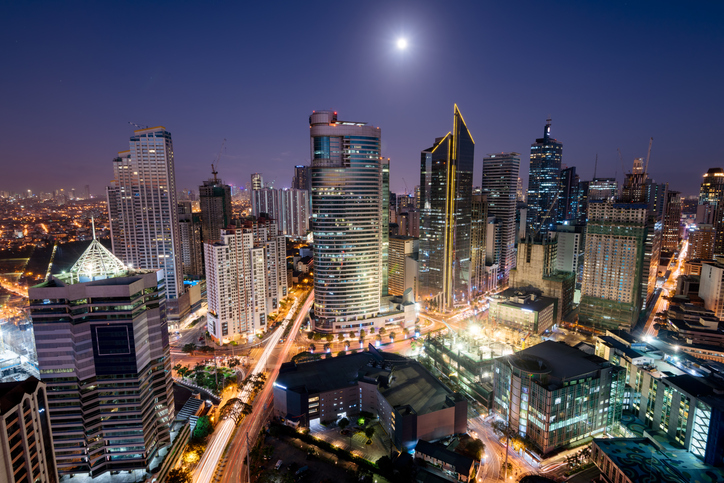
“There are really a few more factors that should be considered,” he adds. “ When Filipino-American businessman Col. Joseph McMiking looked at the barren cogon-filled grass lands around the former Manila Airport, who could have envisioned that such emptiness would fill the needs of around 25 million Filipinos then? And yet when you look at those former cogon fields now called Makati, one can easily say, ‘Location, location, location’.”
Col. McMiking helped transform a vast piece of land in Makati after the devastation of World War II into the center of business and commerce that it is today. Under his guidance, Makati became the financial capital of the country, and the value of its real estate skyrocketed and continues to do so.
“What Col. McMiking saw was just part of a vision beyond the emptiness,” Bocaling adds. “It was more than just ‘location, location, location’ that mattered.”
Bocaling, who once served as president of the Philippine Association of Realtors Board, believes there are a few things to consider when determining if the property you bought or are planning to buy can bring you a hefty return on your investment. Here, he lists several other factors that can influence the value of property.
1. Demographics
According to Bocaling, the profile of people who will be settling down or doing business around your property is a good indicator of value appreciation. “The type of people [who] will use the property helps determine its value,” he says. “Their economic class, their activities or purpose for use of the property affect the value either in a positive or negative manner.”
2. Location
Consistently, this is a major consideration. “Of course, this is one factor that is always a factor,” the portal also quoted Bocaling as saying. If it is close to schools, supermarkets, a business district, a hospital, and a church, the property shoots up in value. A self-sustaining neighborhood is always a good bet.
3. Vision of developers and local government units (LGUs)
The property developer, along with its relationship with the LGU, should always be considered. It goes without saying that it’s best to stick with those with a proven track record. “This is a factor that really decides the desirability of a piece of property,” Bocaling explains. He cites the example of NUVALI, Ayala Land’s prime residential and commercial development that straddles the Laguna towns of Sta. Rosa and Cabuyao. “Who would have ever thought [that it would develop into what it is today]?” Bocaling said.
4. Economic activity trends
Commerce is also a good sign, Bocaling says. “Is the property in a Central Business District (CBD)?” he asks. “[Is it a] highly residential community? A [small] condominium or a [major] condominium? Economic activity dictates greatly on property values. Obviously, the more activity, the higher the value.”
5. Political stability
It may sound obvious, but Bocaling says this is a must when talking about not just value appreciation, but any investment. “Without this, few things in this country would be of any value,” he says. A stable and predictable government creates a stable and predictable economy, giving value to investments made.
The longest-running, most trusted and biggest Philippine investment event in the Middle East region, Philippine Property and Investment Exhibition (PPIE), is back. It has helped thousands of OFWs own their very own home. Be part of PPIE 2019 on April 26-27 to reach your aspired home. Like @ppieuae on facebook to get tips and alerts on unbeatable deals.