The Philippines has marked a historic milestone by signing the Comprehensive Economic Partnership Agreement (CEPA) with the United Arab Emirates, its first-ever free trade agreement with a Middle Eastern country.
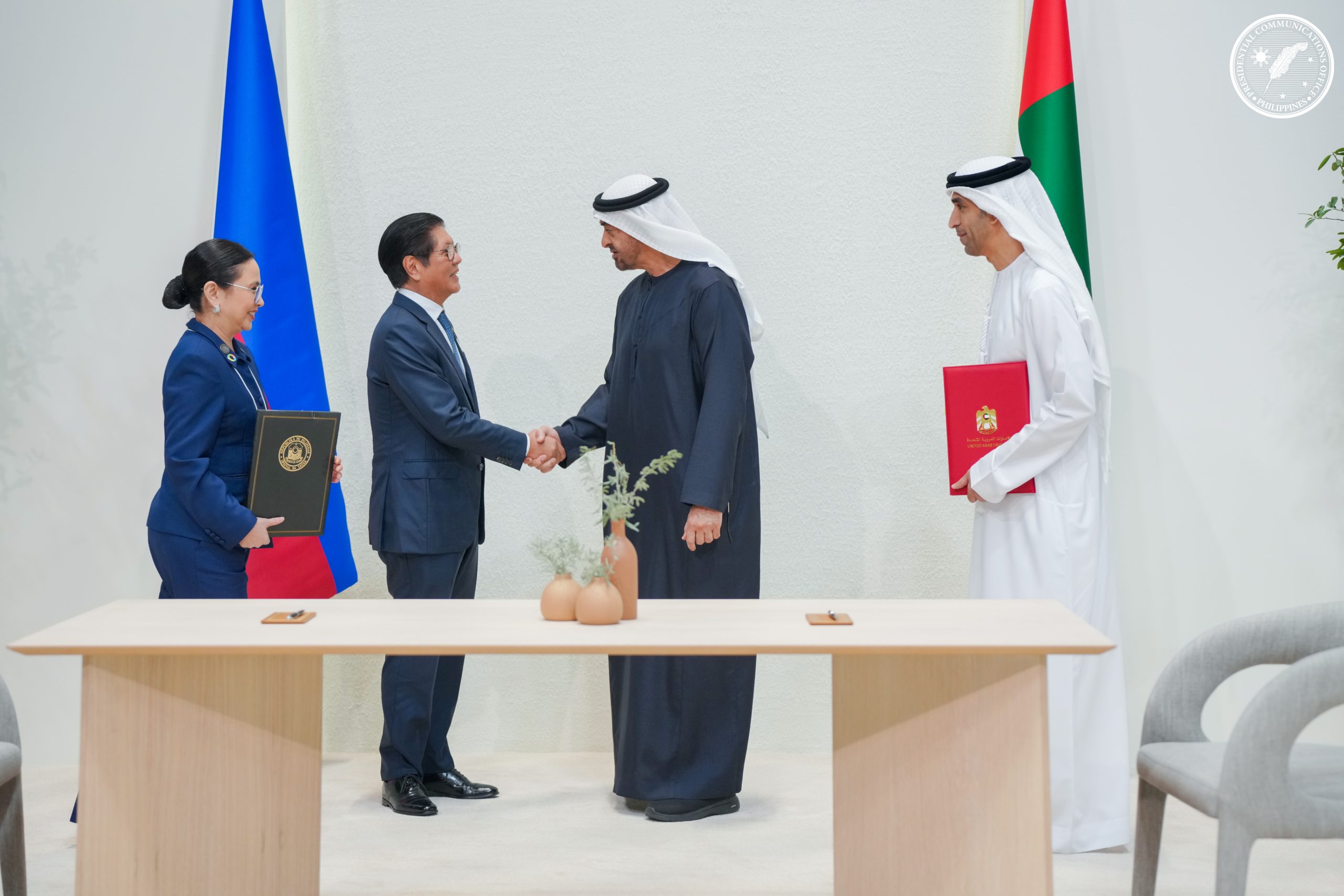
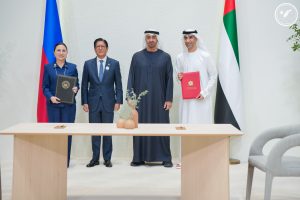
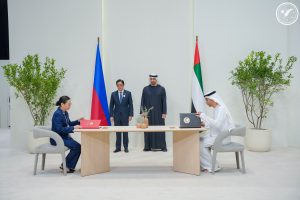
President Ferdinand R. Marcos Jr., together with UAE President His Highness Sheikh Mohamed bin Zayed Al Nahyan, witnessed the signing and exchange of CEPA on Tuesday, Jan. 13.
The agreement was signed on behalf of the Philippines by Trade and Industry Secretary Ma. Christina Roque on the sidelines of the Abu Dhabi Sustainability Week (ADSW) 2026 Summit at the Abu Dhabi National Exhibition Center.
Lower tariffs, cheaper products
CEPA is a bilateral trade pact aimed at lowering trade barriers, expanding market access, and encouraging two-way investments between the Philippines and the UAE. One of its key provisions is the reduction or elimination of tariffs on Philippine exports, making the country’s goods and services more affordable and competitive in the UAE market.
Beyond trade in goods, CEPA is also expected to boost investment between the two countries and create new opportunities for Filipino professionals and service providers in the UAE.
Sectors covered
The free trade agreement covers sectors including digital trade, MSMEs, sustainable development, intellectual property, competition and consumer protection, government procurement, and technical cooperation.
Several Philippine exports are expected to benefit from CEPA, including bananas, pineapples, canned tuna, electronics, machinery, and other high-demand products, as improved market access could make these goods more competitive in the UAE.
The agreement also ensures a stable and non-discriminatory environment for Filipino companies, including MSMEs, in sectors such as IT-BPM, tourism, healthcare, education, construction, and professional services.
Gateway to GCC market
In 2024, bilateral trade between the Philippines and the UAE reached nearly US$1.83 billion. The UAE ranked 18th among the Philippines’ trading partners and accounted for almost 39 percent of Philippine exports to the Middle East, highlighting its importance as a trade partner.
Preliminary studies suggest the agreement could increase Philippine exports to the UAE by 9.13 percent, generate savings for consumers, and strengthen overall trade ties with the wider Gulf region.
Apart from the UAE, CEPA is seen as a gateway to the wider Gulf Cooperation Council (GCC) market, which includes Saudi Arabia, Oman, Qatar, and Kuwait—some of the most prosperous economies in the region.
The agreement also reinforces existing Philippines-UAE partnerships, including the Investment Promotion and Protection Agreement, and cooperation in areas such as trade, energy, logistics, innovation, and tourism.
Years in the making
The Philippines and the UAE formally announced the start of free trade talks in 2022, with negotiations beginning in May 2024. By 2025, both sides had concluded discussions on key provisions, completed legal reviews, and prepared for the signing of the agreement.
According to Ambassador Ver, the CEPA reflects an elevated level of partnership between the two countries—one that expands cooperation into previously untapped sectors and strengthens economic ties alongside the long-established people-to-people relationship.