
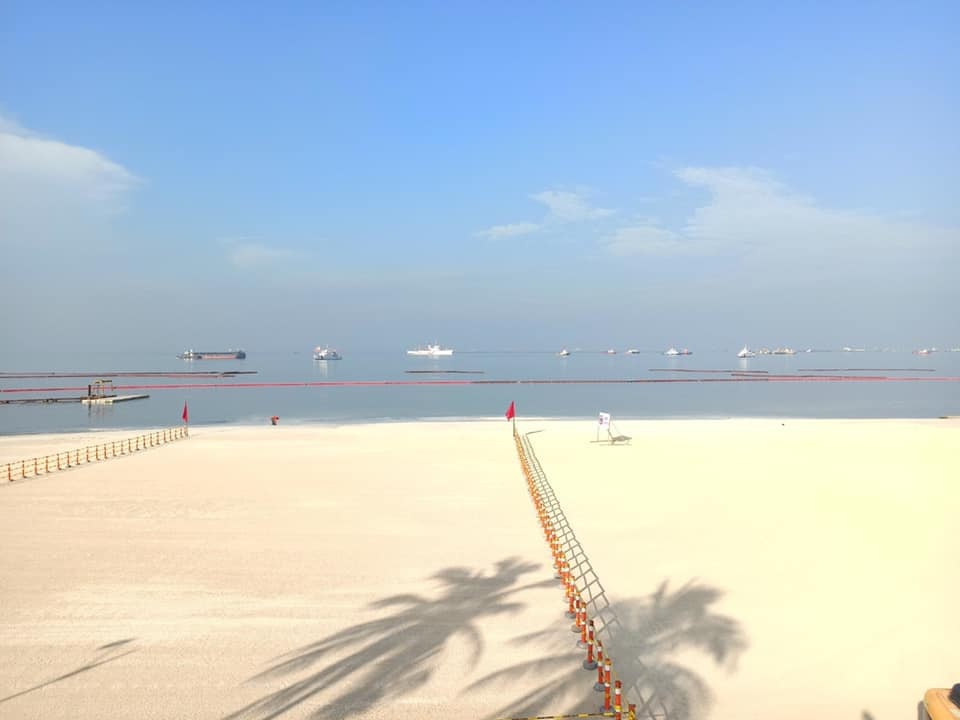
Planting mangroves for the ongoing rehabilitation of the Manila Bay will provide more benefits to the Philippine capital, instead of placing crushed dolomite.
The UP Diliman Institute of Biology stated that mangroves are one of the most effective nature-based solutions that can be introduced to both conserve and contribute to the area’s biodiversity – a move that is also endorsed by the International Union for Conservation of Nature.
“We advocate and are willing to assist the DENR in a science-based rehabilitation program for Manila Bay that targets the recovery of its biological functions and services… and understands the interplay between natural processes and human activities,” read the report from the institute.
RELATED STORY: Filipinos crowd Manila Bay during ‘white sand beach’ opening without social distancing
Other highlighted benefits include contamination reduction in the area and providing safe spaces for migratory animals.
“Having ecologically healthy mangroves will also help lessen heavy metal contamination, a condition that beset Manila Bay for a long time. Manila Bay, with its intertidal and mangrove areas, is considered an important stopover site for migrating waterbirds included threatened species,” read the report.
The institute stresses that they are against the artificial placement of the crushed dolomite, stating that it is not the best way to spend government money.
“The fund should have been directed to more viable, scientifically sound projects that can restore Manila Bay to a state that is fit for recreation. Collaborative action among institutions and stakeholders is needed to ensure that efforts to rehabilitate Manila Bay will benefit both environment and the society,” concluded the statement.