Southeast Asian foreign ministers called for an immediate cessation of hostilities in the Middle East, warning that the ongoing conflict endangers civilian lives, disrupts energy supplies, and could affect global trade networks.
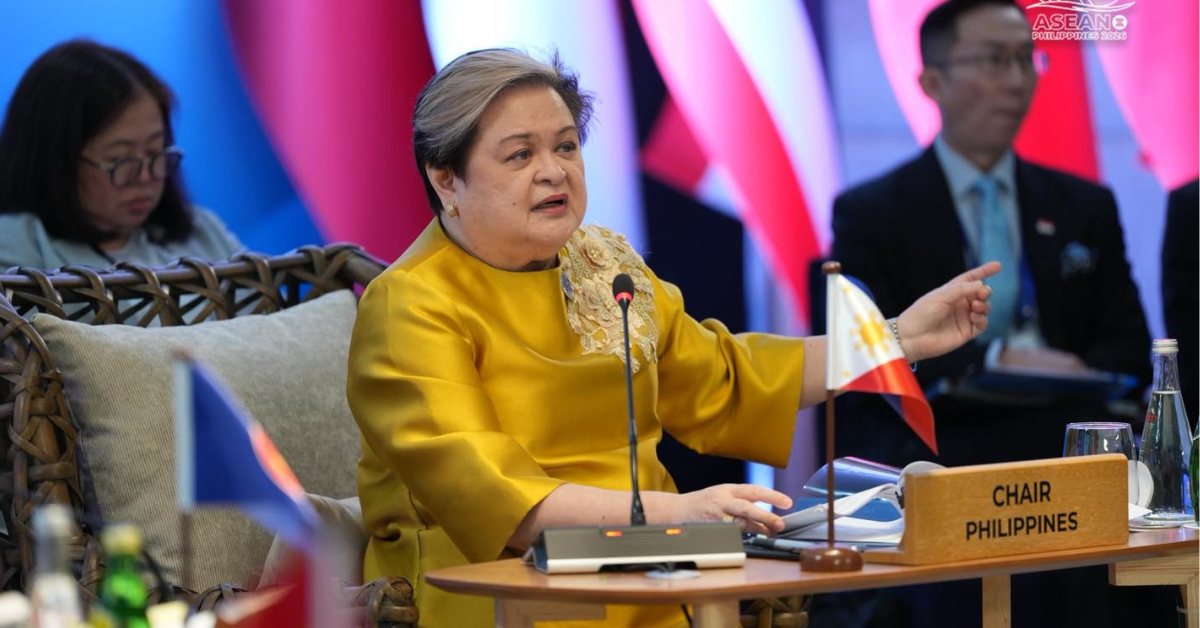
The emergency meeting was convened virtually by Philippine Foreign Affairs Secretary Ma. Theresa Lazaro, in her capacity as chair of the Association of Southeast Asian Nations (ASEAN). The discussion focused on protecting ASEAN nationals abroad and safeguarding regional economic stability amid rising tensions.
Foreign ministers from Singapore, Brunei, Indonesia, Laos, Thailand, and Vietnam attended, while senior officials represented Cambodia, Malaysia, Myanmar, and Timor-Leste.
Lazaro said the meeting addressed the escalation of hostilities following Israel and US strikes on Iran on February 28, Israel’s assault on Lebanon, and retaliatory attacks by Iran across the region.
“We emphasized the importance of the immediate cessation of hostilities and called on all parties to exercise utmost self-restraint and resolve differences through diplomacy and dialogue,” Lazaro said.
Under the Philippines’ chairmanship, ASEAN, guided by the theme “Navigating Our Future, Together,” called for closer coordination among member states to mitigate economic impacts and safeguard energy supply chains and citizens abroad.
In a joint statement, the ministers described the conflict as a “grave threat” to civilian lives and regional and global stability, urging all nations to respect international law, including the United Nations Charter, and reaffirming the protection of civilians and civilian infrastructure during armed conflict.
The meeting also examined potential economic fallout, including risks to global energy markets, shipping lanes, and air transport routes critical to Southeast Asia’s trade-dependent economies. Ministers stressed the importance of keeping energy and trade flows open to minimize disruption to essential goods, including food and fuel.
To strengthen regional economic resilience, ministers highlighted the need for diversified energy sources, expanded renewable energy, and reinforced logistics and supply chain connectivity. They encouraged greater intra-ASEAN trade and cooperation through initiatives such as the ASEAN Framework Agreement on Petroleum Security, ASEAN Power Grid, and Trans-ASEAN Gas Pipeline.
The safety of Southeast Asian nationals in the Middle East remained a key concern. Ministers reaffirmed their commitment to coordinate consular assistance and provide emergency support for citizens caught in crisis situations.