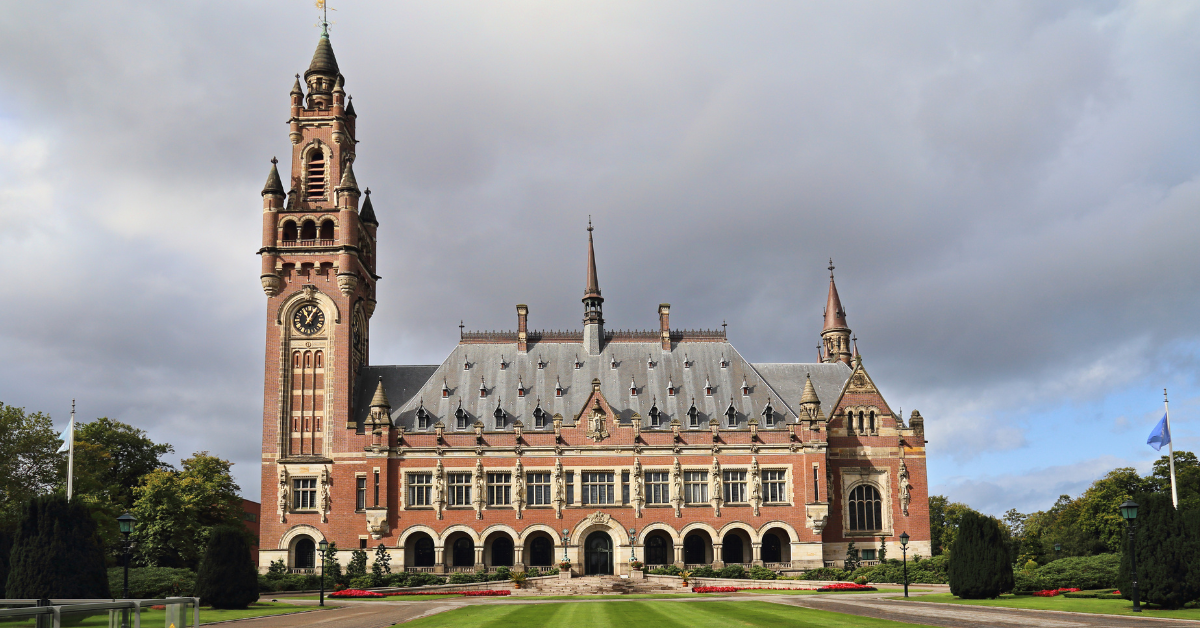
The United Nations’ top court has issued a landmark legal opinion that paves the way for countries to sue one another over the effects of climate change, including historical greenhouse gas emissions.
In its advisory opinion, the International Court of Justice (ICJ) in The Hague recognized the “urgent and existential threat” posed by climate change and affirmed that countries have legal obligations to take stronger action.
While the ruling is non-binding, legal experts say it carries significant legal and political weight and could influence future climate litigation worldwide.
The court ruled that states that fail to pursue the most ambitious climate plans could be in breach of international law, including the 2015 Paris Agreement.
ICJ Judge Yuji Iwasawa added that even countries not party to the Paris accord remain obligated under broader international law to protect the environment.
The decision is seen as a major win for climate-vulnerable nations, particularly low-lying island states that are already facing the consequences of rising sea levels and extreme weather.
The case was initiated by a group of Pacific Island law students in 2019 and later led by the government of Vanuatu.
Legal experts say the opinion may support claims for financial compensation in future cases, particularly from countries most responsible for historical emissions. The court noted that nations suffering irreversible damage, such as lost infrastructure or land, may seek damages, though determining accountability would need to be decided case by case.
The court rejected arguments from developed countries, including the United Kingdom, that existing climate treaties are sufficient. Many poorer nations brought the case out of frustration, claiming wealthier states have failed to uphold climate finance and emission reduction commitments.
Campaigners hope the ruling will strengthen demands for accountability and financial support. The Marshall Islands, for example, has estimated it would need $9 billion to adapt to climate impacts—money it does not have.
While the ICJ’s opinion is advisory, similar past rulings have influenced state behavior. In 2023, the UK agreed to return the Chagos Islands to Mauritius following an ICJ opinion.
A spokesperson for the UK’s Foreign, Commonwealth and Development Office said the government is reviewing the opinion, but reaffirmed its commitment to existing UN climate agreements.
Earlier UN data estimates that climate change caused $2.8 trillion in damages globally between 2000 and 2019.