Dubai’s streets bustle with over 200 nationalities, reflecting a city where cultures intersect and identities constantly adapt. For many overseas Filipinos living here, it is easy to be influenced by foreign languages and lifestyles, especially when daily life revolves around English, Arabic, and other tongues.
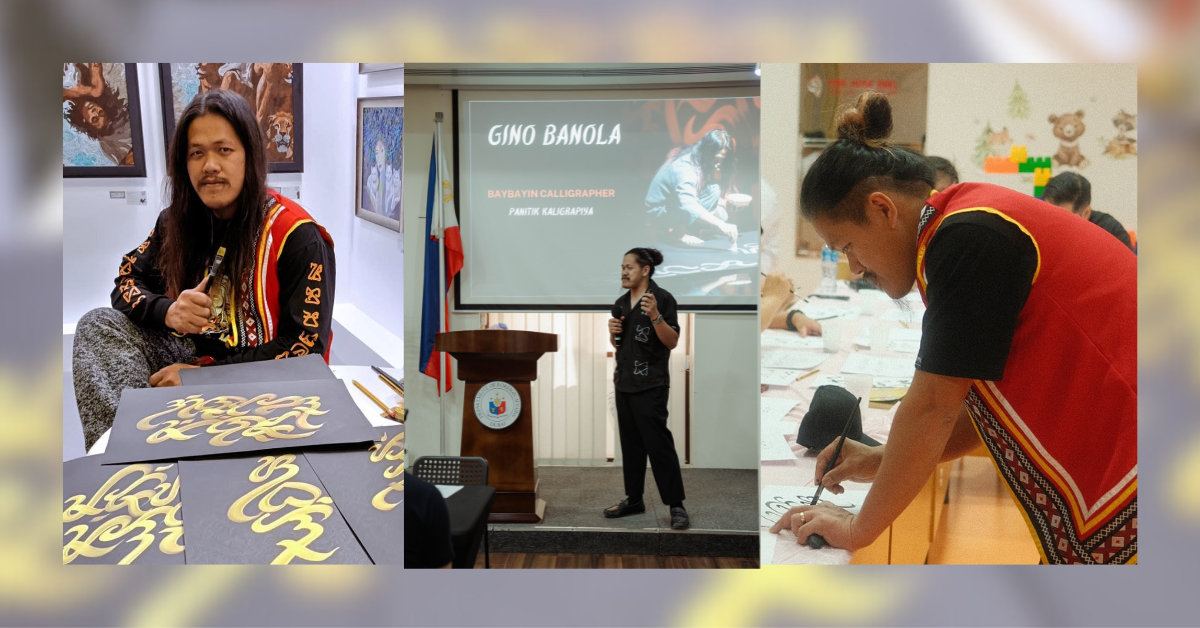
Yet even in this multicultural mix, Filipino identity continues to thrive, with Gino Banola as one of its most passionate champions. An OFW, Bicolano artist, and martial arts practitioner, he preserves a piece of his homeland by breathing life into a script many thought was fading into history.
Spending 14 years in Dubai carving a life as a 3D designer, entrepreneur, and martial arts practitioner, Banola now adds teaching Baybayin calligraphy to his roles to showcase the beauty and resilience of Filipino culture.
Baybayin, a pre-colonial Filipino writing system once considered dying, becomes, in his hands, more than a script—it is art, pride, and a bridge connecting Filipinos abroad to their roots.
Inspired by Arabic calligraphy
In an interview with The Filipino Times, Banola recalls discovering Baybayin while developing his clothing brand that celebrates Filipino culture, heroes, and heritage. Though he initially didn’t know how to read or write the script, experimenting on a whiteboard of his child ignited a passion.
“Nilalagay ko ang Baybayin sa bawat design ng shirt, pero hindi pa ako marunong magsulat at bumasa. Then one time, I tried to write it sa whiteboard ng anak ko, then ‘yun na. I found the beauty of it, ‘yung flow, and I felt proud of our identity, that we have our own writing system,” he shares.
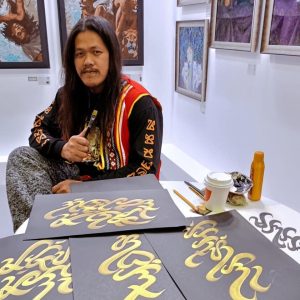
Dubai’s own embrace of Arabic calligraphy further shaped his vision. Observing how Emiratis preserve their cultural identity even in the futuristic spaces, such as the Museum of the Future, Banola found inspiration to do the same for Baybayin.
He notes that if Arabic script can thrive alongside modern ambitions, the Filipino writing system deserves the same pride and recognition.
“Mayroon din tayo nito. May mailalatag din tayo sa lamesa na pwedeng makipagsabayan sa Arabic Calligraphy, which is the Baybayin or Philippine Script calligraphy,” he says.
Although learning Baybayin scripts comes naturally to Banola, his journey is shaped by long nights of practice and research to find his own artistic voice, all while balancing life as an OFW, a parent, and an entrepreneur. He had no mentors, and the process wa largely self-taught, as not many practiced Baybayin calligraphy, especially overseas.
“That’s why most of my Baybayin calligraphy is insipred by Arabic calligraphy, kasi ‘yun ang laging nakikita ko,” he adds.
Introducing Baybayin in Dubai
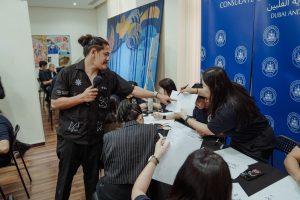
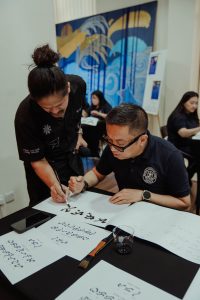
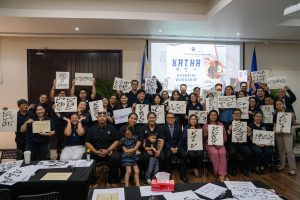
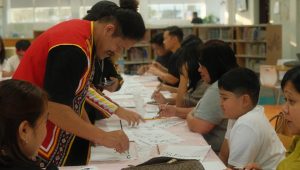
It wasn’t long before Banola felt compelled to share his passion with others. Partnering with Krishna of Tribe Creatives, he launched his first workshop in November last year at the Dubai Public Library in collaboration with Dubai Culture. This was followed by a series of workshop that continued to attract both Filipinos and non-Filipinos.
“Nakakataba ng puso na parang naibalik ko ulit sa kanila ang isang part ng identity nila,” he shares. “For non-Filipinos, namamangha sila na mayroon din tayong sariling way ng pagsulat, at the same time nakakalungkot din kasi nagtatanong sila bakit hindi natin ginagamit.”
Just recently, in time for Buwan ng Wika celebration, Banola also held a Baybayin calligraphy workshop in collaboration with the Philippine Consulate General in Dubai.
“We should embrace it as Filipinos because no one will do it for us. Isa itong yaman,” he says.
A calling to promote and preserve

Banola believes that promoting Baybayin internationally can have a greater impact than limiting it to the Philippines, offering a platform to showcase Filipino culture globally. However, teaching abroad comes with its own set of challenges. Even in the Philippines, the script was not commonly used, so introducing it to a foreign country required extra effort.
“Kaya siguro kaunti lang may alam nito lalo na dito sa UAE, kasi marami tayong obligasyon, trabaho, kaya hirap um-attend yung iba sa workshop dahil sa schedule,” he says, adding that he tries to address this by holding workshops on Sundays and choosing easily accessible venues.
He also emphasizes the timeliness and broader cultural significance of his work, noting how modern Filipino society is heavily influenced by foreign cultures.
“It’s my calling here abroad to promote it, preserve it, and I think it’s the right time kasi sa panahon ngayon, naco-colonize na ulit tayo without knowing it,” he says. “Tandaan natin, mas madali maging alipin ang isang tao kapag hindi niya alam ang kanyang pagakakakilanlan, kaya sobrang importante [ng Baybayin].”
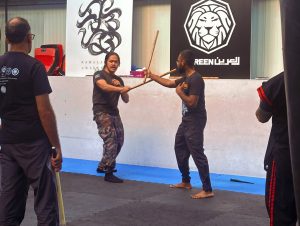
Banola’s efforts extend beyond workshops. Baybayin was also woven into his teaching of Filipino martial arts, particularly Arnis, both of which he considered as traditional Filipino art forms at risk of being forgotten.
“When I practice or teach Arnis, lagi kong sinasabi na nagba-Baybayin din ako. I always introduce Baybayin, and I also give a Baybayin calligraphy to attendees of workshop as a giveaway,” Banola says
Inspiring the youth and future generation
After more than a decade of working abroad, Banola built his own family in the UAE, and even for his children, he wanted the Filipino script to serve as a stepping stone to understanding their roots.
For Filipinos born and raised in the UAE, Baybayin serves as a bridge to identity, Banola says, as it provides a tangible link to their heritage, offering a deeper understanding of who they are and the richness of Filipino culture.
“I hope my Baybayin art inspires the future generation to find their identity, to be proud as Filipinos, so then they always carry the flag, and represent it sa kahit ano mang ginagawa nila, small or big,” he adds.
Through these efforts, he hoped that Filipinos would begin to give Baybayin the recognition it deserves, integrating it into their branding and becoming part of a movement to spread awareness. He believes that if the Filipino community in the UAE collectively adopted Baybayin, its impact would ripple back to the Philippines, especially the younger generation.
Through workshops, clothing designs, and martial arts, Banola is ensuring that a script once at risk of fading lives on—linking the past to the present, the Philippines to Dubai, and a sense of identity to every Filipino willing to trace their roots.
By reviving Baybayin overseas, Banola reminds the Filipino community that heritage does not fade with distance; it thrives wherever we carry it.