The Philippines and the Republic of Korea reaffirmed their commitment to uphold a rules-based international order amid growing geopolitical uncertainties in the region.
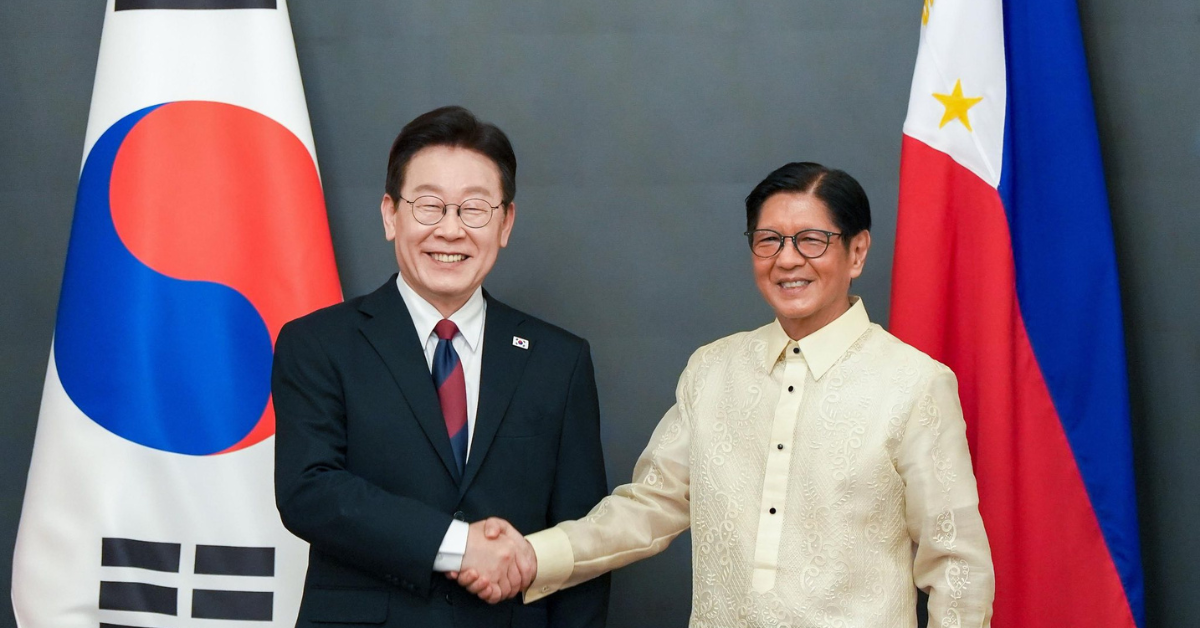
Ferdinand Marcos Jr. made the statement during a joint press conference with South Korean President Lee Jae-myung at Malacañang Palace.
“President Lee and I likewise exchanged views on regional and international issues such as the South China Sea and the Korean Peninsula,” Marcos said.
He noted that both leaders acknowledged increasing uncertainty in geopolitical developments and agreed on the need to firmly and consistently uphold a rules-based order governed by international law, particularly in the maritime domain.
During their bilateral meeting, Marcos said discussions covered defense and security, maritime cooperation, economic and development partnerships, as well as people-to-people exchanges.
“We agreed that we have made significant strides in advancing and deepening our bilateral cooperation towards the attainment of our mutually beneficial goals,” the President said.
Marcos also conveyed appreciation for South Korea’s continued support to the Philippines, including assistance in the modernization of the Armed Forces of the Philippines and the strengthening of the Philippine Coast Guard.
He likewise cited South Korean investments that helped revive the country’s shipbuilding industry and bolster its role in the semiconductor value chain, as well as infrastructure projects such as the Panguil Bay Bridge in Northern Mindanao.
Other areas of cooperation include development programs in health, agricultural mechanization, energy, and artificial intelligence, as well as efforts to safeguard the rights and welfare of over 70,000 Filipinos living and working in South Korea.
During President Lee’s state visit, the two countries signed several memoranda of understanding (MOUs) aimed at expanding bilateral cooperation.
These include agreements on digital cooperation; technology, digitalization, and innovation programs; and the procurement of defense materials.
Additional MOUs cover cooperation in patriots and veterans affairs, agriculture, trade and investment, intellectual property, foreign language education programs in Philippine schools, cultural exchanges, and police cooperation.
The agreements are expected to further strengthen strategic ties between Manila and Seoul across security, economic, technological, and cultural sectors.