
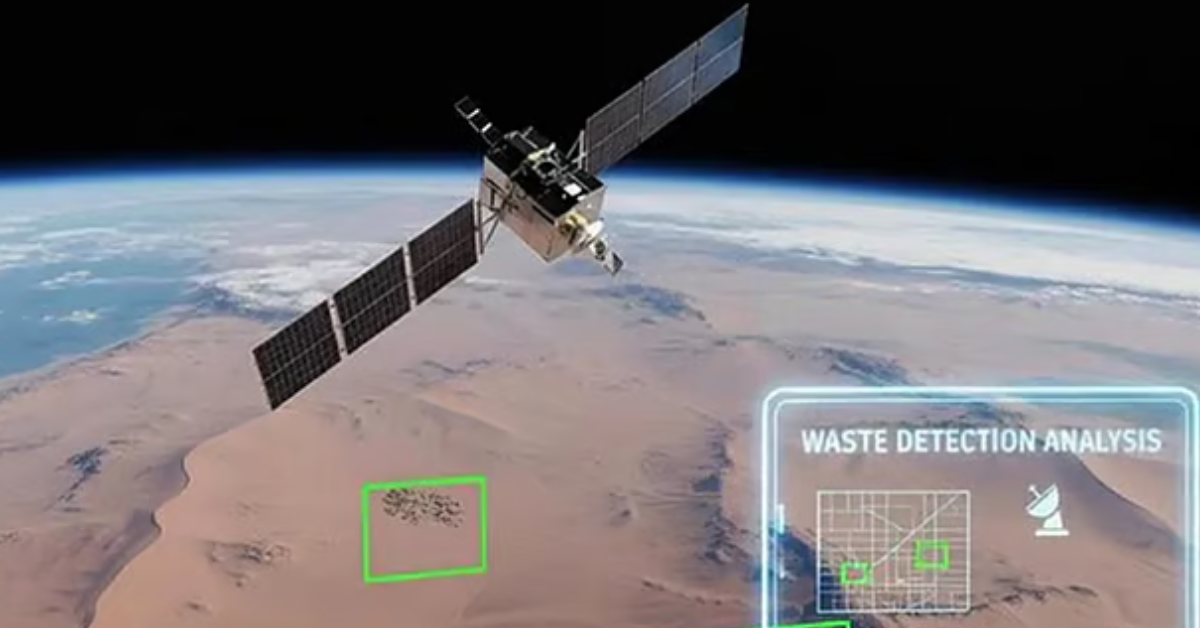
The Environment Agency – Abu Dhabi (EAD) has launched a pilot project that uses artificial intelligence and satellite imagery to detect illegal waste dumping across the Emirate, aiming to enhance waste management, strengthen environmental monitoring, and modernize oversight through smart technology.
The initiative is the first of its kind in the UAE to integrate AI models with satellite analysis for waste management, marking a shift from traditional field inspections to an intelligent system capable of automatically analyzing data and predicting potential environmental violations.
Dr Shaikha Salem Al Dhaheri, Secretary General of EAD, said the project underscores Abu Dhabi’s commitment to sustainability and digital innovation, in line with the UAE Artificial Intelligence Strategy 2031 and the Abu Dhabi Environmental Centennial 2071 Plan.
Implemented as a pilot in Al Buqairiyah in Al Ain, the system achieved an accuracy rate of more than 90 percent, identifying 150 illegal dumping sites, significantly higher than the 43 sites detected through conventional inspections. The technology also monitors waste types, changes in site size, and the duration of dumping, enabling faster response and more effective cleanup operations.
Eng. Faisal Al Hammadi, Executive Director of EAD’s Environmental Quality Sector, said the project enhances coordination with partner entities to ensure the swift removal of waste and prevent repeat violations, while supporting long-term environmental protection efforts.
Following the pilot’s success, EAD plans to roll out the initiative across the Emirate through a centralized, AI-powered monitoring platform.
The project also supports Abu Dhabi’s wider digital transformation agenda, including the TAM 4.0 government platform and the 2025–2027 Digital Strategy, which aims to position Abu Dhabi as the world’s first AI-native government.