
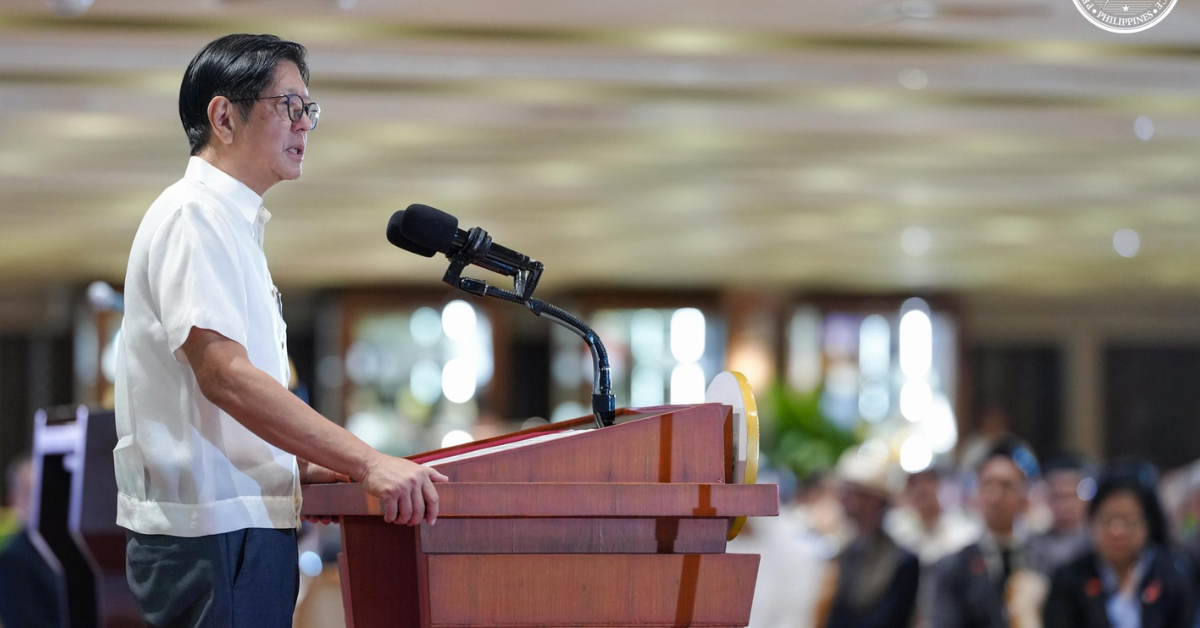
President Ferdinand Marcos Jr. may declare a state of national emergency to address rising fuel prices and potential energy supply disruptions, but only if the situation deteriorates further, Malacañang said.
In an interview, Palace press officer Claire Castro described the move as “possible,” but clarified that the option has yet to be discussed by the Cabinet.
“The President may declare a state of national emergency if the right situation comes, especially when the government sees that many are exploiting the situation,” Castro said.
She noted that the continued increase in domestic fuel prices is largely driven by the ongoing conflict in the Middle East, an external factor beyond the government’s control.
While acknowledging that higher fuel costs could trigger price increases in basic goods, Castro emphasized that any adjustments must be justified.
“There is no need to impose unreasonable or excessive price increases. We need to work together and make sacrifices because many people are being heavily affected,” she said, urging businesses to temper profit-taking during the crisis.
Castro’s remarks marked a shift from her earlier position, when she rejected a call from the Trade Union Congress of the Philippines (TUCP) for the President to exercise emergency powers to temporarily take over the country’s privatized oil industry amid record-high fuel prices breaching the P100-per-liter mark.
The TUCP had cited provisions under the Downstream Oil Industry Deregulation Act of 1998, which allows the Department of Energy, on behalf of the President, to assume control of oil firms during a national emergency.
The same provision was invoked by former President Gloria Macapagal-Arroyo in 2009 through Executive Order No. 839, which mandated a price freeze after Luzon was placed under a state of emergency due to Typhoon Ondoy (Ketsana) and Typhoon Pepeng (Parma).
Although the order was lifted after two days, Pilipinas Shell Petroleum Corporation challenged the legality of the provision before the courts. In 2023, however, the Supreme Court upheld its constitutionality in the case Mendoza v. Pilipinas Shell (G.R. 209216).