
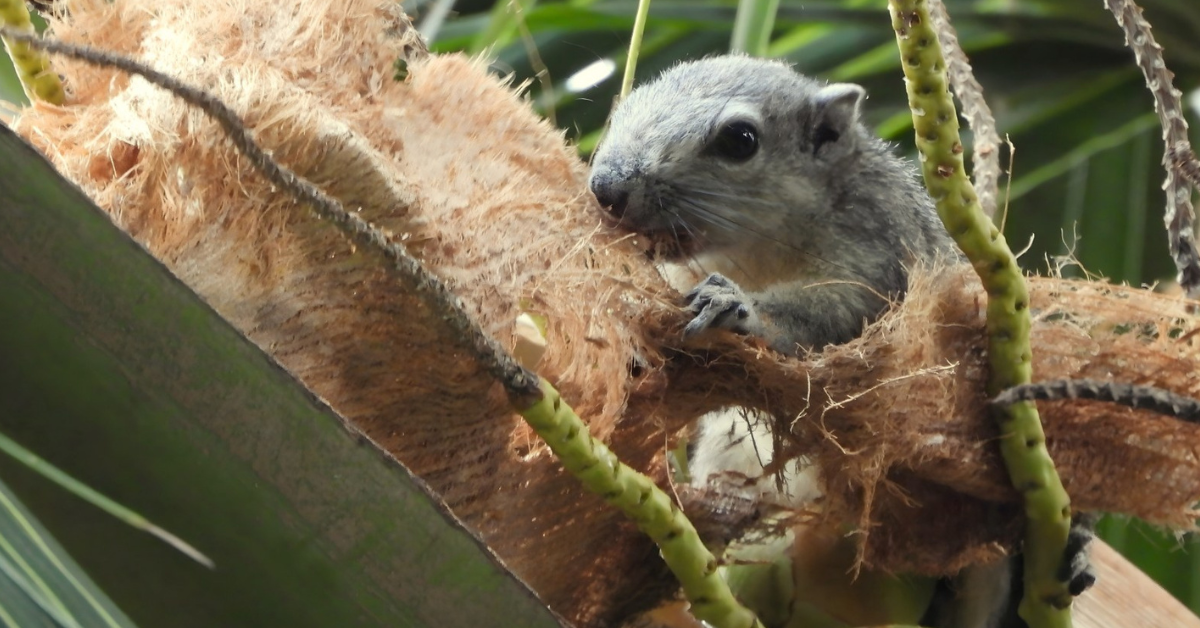
Residents in parts of Luzon have reported sightings of unusual squirrels darting across trees and power lines, raising concerns among environmental authorities.
The Department of Environment and Natural Resources (DENR) identified the animals as Finlayson’s squirrels, an invasive species not native to the Philippines.
Scientifically known as Callosciurus finlaysonii, the species was likely introduced into the country through the exotic pet trade.
According to DENR-Biodiversity Management Bureau Wildlife Resources Division Chief Anson Tagtag, initial investigations suggest the animal was brought in by a foreign owner and later released into the wild, where it adapted and reproduced.
With no natural predators in the local environment, the squirrels have rapidly increased in number. They can produce two to four offspring multiple times a year, accelerating their spread across urban and rural areas.
Authorities warned that the species poses risks to biodiversity and local ecosystems. Finlayson’s squirrels have been observed preying on bird eggs and competing with native wildlife for food. They are also known to forage aggressively on crops, fruits, and ornamental plants.
Beyond ecological impact, the animals have been linked to infrastructure damage. In some cases, squirrels have climbed electrical facilities and chewed on wiring, triggering power outages. One such incident in Metro Manila was traced to a squirrel found dead in a damaged transformer.
The DENR also cautioned the public on potential health risks. Like other wild animals, the squirrels may carry diseases such as Rabies, posing danger through bites or scratches.
Sightings have been reported in Makati, Muntinlupa, and Quezon City.
The DENR advised the public not to touch, feed, or attempt to capture the animals. Instead, sightings should be reported to authorities for proper handling. Keeping or trading the species as pets is also discouraged and may violate environmental laws.