
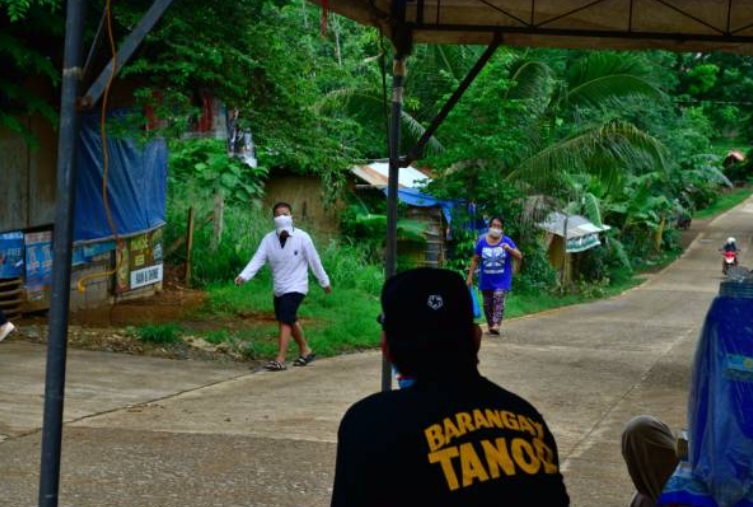
The Philippines will use arrest as a “last resort” to restrict the movement of those unvaccinated against COVID-19.
According to the Department of the Interior and Local Government (DILG) arrests should be a last resort.
The department ordered local officials to restrict the mobility of individuals still without coronavirus shots “within the bounds of law.”
This followed President Rodrigo Duterte’s order earlier this week.
RELATED STORY: Duterte orders local officials to “restrain” unvaccinated individuals if they go outdoors
Interior Undersecretary Jonathan Malaya said the measure is meant to protect those still not immunized from the respiratory disease brought about by the coronavirus.
Malaya said, “They are prone to critical illness and hospitalization and we need to protect our health care system from being overwhelmed with the exponential rise of coronavirus cases because of the omicron variant.”
Duterte this week ordered officials to “restrain” and “arrest” people unvaccinated against COVID-19 who continue to roam around, but rights advocates earlier said the act is discriminatory and some people do not have access to vaccination.
The Commission on Human Rights (CHR) also said the government’s immunization program is driven by circulating misinformation and arresting unvaccinated people would go against the Constitution and “a human rights-based approach” should be taken.
READ ON: Omicron pushes COVID-19 cases 300 million worldwide
“While the 1987 Constitution provides that liberty of movement can be restricted in the interest of national security, public safety, or public health, it still requires a law to make the said restriction legal,” it said, adding,
“Presently, there is no law that makes being unvaccinated a crime, nor is there any law that would satisfy the Constitutional provision on curtailing freedom of movement. Any arrest made on these grounds may be illegal; thus, violative of the Constitution and our guaranteed human rights.”
Interior Secretary Eduardo Año defended the President’s directive and said he was “merely exercising his authority” amid a public health emergency.