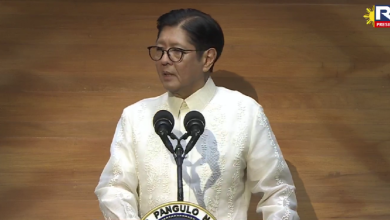

President Ferdinand R. Marcos Jr.’s 2026 State of the Nation Address placed Pag-IBIG Fund at the heart of the government’s effort to help Filipino workers build savings, withstand financial crises and finally own a home.
For millions of Filipinos, the dream of owning a home is measured not only in square meters, but in years of work, disciplined saving and monthly payments.
In his fifth State of the Nation Address at the Batasang Pambansa on July 27, 2026, President Ferdinand R. Marcos Jr. presented Pag-IBIG Fund as one of the institutions helping bring that dream within reach.
The President highlighted two major developments: the increase in Pag-IBIG Fund’s maximum housing loan to ₱10 million, and the financial relief extended to overseas Filipino workers affected by the crisis in the Middle East.
But behind these announcements lies a larger story. Pag-IBIG entered 2026 after a record-setting year, with unprecedented growth in members’ savings, housing-loan releases, investment earnings, assets and dividends.
The institution, the President indicated, is no longer simply a mandatory savings facility or a source of low-cost housing loans. It has become an important pillar of the country’s housing and social-protection system.
A pathway to the Filipino dream
President Marcos described Pag-IBIG Fund, together with the Social Security System and Government Service Insurance System, as a source of long-term protection for Filipino workers.
Through these institutions, workers can save for retirement, receive assistance during emergencies and crises, and build assets that provide security for their families.
“Kasabay ng seguridad na dala ng matatag na trabaho, ang SSS, GSIS, at Pag-IBIG Fund ay nagsisilbing proteksyon para sa mga manggagawang Pilipino,” Marcos said.
The President added that Pag-IBIG provides Filipino workers with a pathway to owning their homes, particularly through the government’s Expanded Pambansang Pabahay para sa Pilipino, or Expanded 4PH, Program.
He reported that more than 500,000 homes had been constructed or financed under the government’s housing initiatives, including more than 100,000 homes added within one year through the expanded 4PH Program.
The broader housing effort covers newly developed communities, resettlement projects, rental housing, the Community Mortgage Program and Pag-IBIG Fund’s acquired assets, in partnership with local governments and private developers.
Housing loan limit raised to ₱10 million
One of the clearest commitments in the President’s address was the increase in Pag-IBIG Fund’s maximum housing loan amount to ₱10 million.
“Ngayon, itinaas natin sa sampung milyong piso ang limit sa pautang para sa pabahay,” Marcos announced.
The President explained that the higher ceiling would give married couples and families greater financial capacity to purchase the homes they want for their families.
The increase is particularly significant for middle-income Filipinos and OFWs seeking homes in Metro Manila and other highly urbanized areas, where property prices have risen beyond the reach of traditional low-cost housing-loan limits.
It also substantially broadens Pag-IBIG’s housing-finance role. While the Fund continues to serve minimum-wage and lower-income members, the ₱10-million ceiling makes its long-term financing more relevant to middle-class professionals, dual-income households and overseas Filipinos investing in homes for their families.
For OFWs, the higher limit could mean greater flexibility in buying a family residence, acquiring a condominium close to employment and education centers, or constructing a permanent home for retirement.
Affordability across income groups
The higher loan ceiling does not mean Pag-IBIG is moving away from its socialized-housing mission.
Even as it expands financing options for middle-income borrowers, the Fund continues to offer a subsidized 3% interest rate to eligible socialized-housing borrowers.
It has also introduced promotional rates of 4.5% and 5.75% for other housing categories, including low-cost, medium-cost and open-market housing loans.
This combination is important.
The ₱10-million ceiling increases the range of properties that members can finance. At the same time, subsidized and promotional rates help preserve access for minimum-wage, low-income and moderate-income households.
In effect, Pag-IBIG is widening both ends of the housing market: reaching families who need the most affordable financing while becoming more useful to middle-income Filipinos whose desired homes may be priced above traditional socialized-housing limits.
Record growth reaching lower-income families
The strongest evidence of Pag-IBIG’s expanding reach can be seen in its housing performance during the first half of 2026.
From January to June, the Fund released ₱69.19 billion in housing loans, financing 43,051 homes.
This represented a 15% increase in loan value and a 9% increase in housing units financed compared with the same period in 2025.
More significantly, financing for socialized housing more than doubled.
Pag-IBIG released ₱6.70 billion in socialized-housing loans for minimum-wage and low-income members during the first six months of 2026. This was 118% higher than the previous year.
The financing covered 6,601 housing units, representing a 132% increase. Socialized housing consequently accounted for approximately 15% of all homes financed by Pag-IBIG during the period.
These figures show that Pag-IBIG’s financial growth is not confined to its balance sheet.
A greater portion of its lending is reaching workers who have traditionally found formal home financing difficult to access. This is perhaps the most important measure of progress: stronger finances are being converted into more homes for minimum-wage and lower-income families.
Pag-IBIG responds to OFWs in crisis
President Marcos also highlighted Pag-IBIG Fund’s role in assisting OFWs affected by the conflict in the Middle East.
With more than 2.5 million Filipinos working in the region, the crisis disrupted the employment and incomes of many migrant workers and placed additional pressure on their families in the Philippines.
In response, Pag-IBIG provided relief on the loan obligations of affected OFW members. Similar assistance was extended through GSIS, SSS and the National Home Mortgage Finance Corporation to their respective members and borrowers.
The President said the measures provided breathing room to consumers, particularly those paying for their homes and those using borrowed funds to establish or sustain businesses.
Pag-IBIG’s participation in the response demonstrates how a public financial institution can act during a crisis.
Rather than operating only as a static savings and lending facility, the Fund was used responsively to protect members when their incomes and livelihoods were suddenly placed at risk.
For OFWs, whose housing-loan payments often depend on continued overseas employment, temporary relief can help prevent a short-term crisis from resulting in the loss of a long-term family investment.
A coordinated social-protection response
Pag-IBIG’s inclusion alongside SSS, GSIS and NHMFC also signalled a whole-of-government approach to financial relief.
Each institution serves a different segment of the population or provides a distinct form of protection. Taken together, however, they form part of a broader safety net covering employment, retirement, housing, emergencies and family security.
President Marcos reinforced this message when he said government Contract of Service and Job Order workers would receive additional compensation to help cover their Pag-IBIG, SSS and PhilHealth contributions.
He also called on Filipinos to maintain correct and regular monthly contributions, describing Pag-IBIG savings as an investment in their future rather than merely an employment requirement.
Record savings show members’ confidence
Pag-IBIG’s expanded housing capacity is supported by the growing savings of its members.
In 2025, members collectively saved a record ₱160.41 billion, the highest annual collection in the Fund’s history and 21% more than in 2024.
Voluntary savings accounted for the larger share of collections. Of the total, ₱93.60 billion, or 58%, came from voluntary savings, while ₱66.80 billion came from mandatory contributions.
The MP2 Savings Program alone collected ₱83.51 billion during the year.
The figures suggest that many Filipinos no longer view Pag-IBIG solely as a compulsory deduction from their salaries.
Members are voluntarily entrusting more of their money to the institution, particularly through MP2, reflecting confidence in the Fund’s management and its ability to generate competitive returns.
By March 2026, Pag-IBIG had 17.08 million active members.
During the first quarter alone, members saved ₱53.77 billion, consisting of ₱19.90 billion in Regular Savings and ₱33.87 billion in voluntary MP2 Savings. Voluntary savings therefore continued to exceed regular mandatory contributions.
President Marcos referred to this growing membership base in his SONA, noting that the resources being accumulated by Pag-IBIG members continue to expand as membership increases.
Record dividends returned to members
The benefits of Pag-IBIG’s strong financial performance were also returned directly to its member-owners.
For 2025, the Fund declared a record ₱64.34 billion in dividends, the largest dividend distribution in its 45-year history.
Pag-IBIG declared dividend rates of:
• 6.62% for Regular Savings
• 7.12% for MP2 Savings
The record dividend declaration was supported by ₱65.28 billion in net income, strong housing-loan performance, high-performing loan portfolios, increased membership savings and higher investment earnings.
The size of the payout is significant because Pag-IBIG is owned by its members. When the institution performs well, much of the benefit flows back to Filipino workers through higher dividends on their savings.
This creates a reinforcing cycle: members save more, the Fund gains greater financial capacity, more housing loans can be provided, and the earnings generated are returned to members.
Record home financing in 2025
Pag-IBIG’s housing performance was already at an all-time high before the President delivered his 2026 SONA.
In 2025, it released a record ₱140.54 billion in housing loans, financing 90,727 housing units—the highest annual housing-loan release in the institution’s history.
Its assets reached ₱1.23 trillion, while investment income rose by nearly 50% to ₱9.43 billion.
The Fund’s investment portfolio included government securities, time deposits, corporate bonds and preferred shares, providing additional earnings beyond members’ contributions and loan income.
By the first quarter of 2026, Pag-IBIG’s net income had risen further to ₱16.77 billion, an 11% year-on-year increase, driven by housing loans, short-term loans, investments and improved collections.
Financial strength matters because every peso earned prudently increases the Fund’s capacity to protect savings, provide affordable loans and finance more homes without sacrificing institutional stability.
More than a housing lender
The importance given to Pag-IBIG in the President’s SONA reflects the institution’s broader role in the lives of Filipino workers.
For a young employee, it can be the beginning of a long-term savings habit.
For a minimum-wage worker, it can provide access to a socialized-housing loan at a subsidized rate.
For a middle-income couple, the higher ₱10-million ceiling can make a better-located or more suitable family home attainable.
For an OFW, it can provide both an investment vehicle and a way to build a permanent home in the Philippines.
And during an international crisis, it can provide temporary relief that helps a family protect what it has spent years building.
Turning institutional gains into family security
The central story of Pag-IBIG’s performance in 2025 and 2026 is not simply that the Fund became larger or more profitable.
It is that the institution delivered three benefits at the same time: stronger returns for savers, more financing for aspiring homeowners and greater support for members facing financial difficulty.
Its record income, savings and assets provide the institutional foundation. Its record dividends reward the workers who own the Fund. Its expanding housing portfolio converts financial strength into tangible assets for Filipino families.
Most encouragingly, the sharp growth in socialized-housing financing indicates that these gains are increasingly reaching minimum-wage and low-income members.
President Marcos’s SONA therefore offered more than an announcement about a higher loan ceiling.
It presented a vision of Pag-IBIG as a bridge between work and long-term security, between savings and homeownership, and between the sacrifices Filipinos make today and the more stable future they hope to build.
For millions of members in the Philippines and around the world, Pag-IBIG is living up to the meaning of its name: Pagtutulungan sa Kinabukasan—Ikaw, Bangko, Industriya at Gobyerno.
It is a promise that through shared responsibility, disciplined saving and stronger public institutions, the dream of a secure home can move closer to reality.