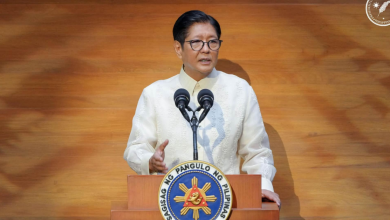
President Ferdinand Marcos Jr. urged Congress to immediately amend the Electric Power Industry Reform Act (EPIRA), saying consumers should no longer shoulder systems loss charges in their electricity bills because the losses are beyond their control.
In his fifth State of the Nation Address (SONA), Marcos said the current practice of passing systems loss charges on to consumers is unfair and called for legislative action to prohibit it.
“At kung pagbawas ng presyo ang usapan, sa aking palagay, panahon na para tanggalin na ang systems loss na ipinapasa sa consumer,” the President said, drawing one of the longest standing ovations during his address.
“Hindi naman kasalanan ng consumer kung bakit nagkaroon ng systems loss. Kaya hindi naman tama na sila pa ang pagbabayarin dito,” he added.
Marcos then appealed to lawmakers to amend Republic Act No. 9136, or the Electric Power Industry Reform Act of 2001, to prevent utilities from charging consumers for systems loss, including the value-added tax imposed on it.
“Therefore, we, the people, request—no, we demand—for the immediate amendment of the EPIRA and to prohibit charging systems loss against consumers, including the value-added tax thereon,” he said.
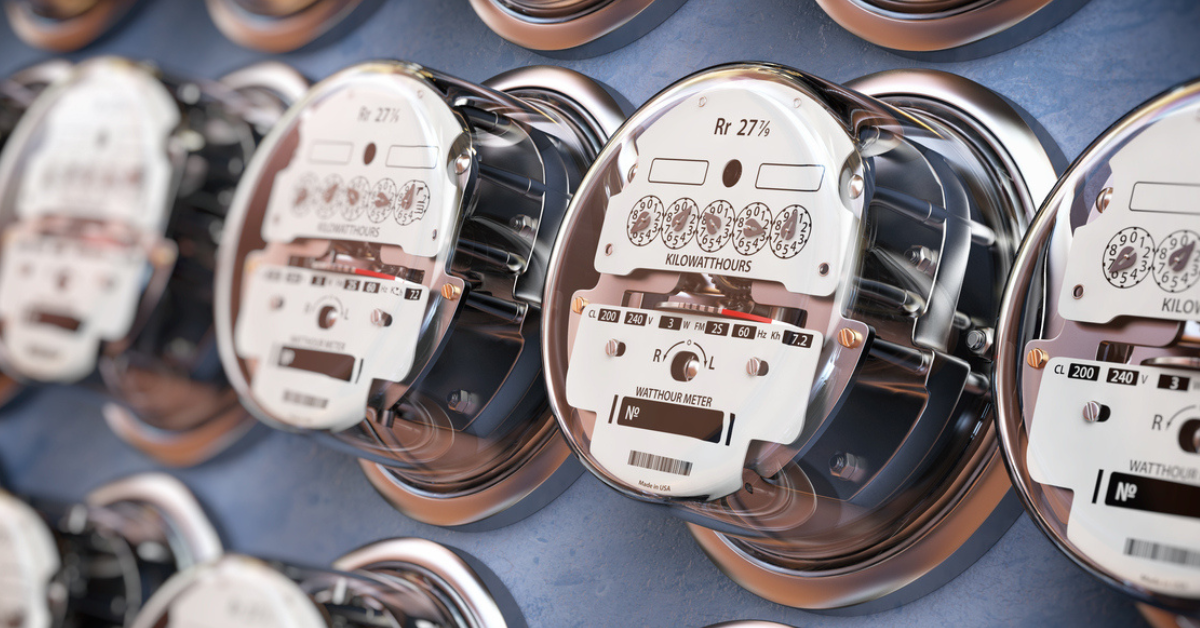
Under the current law, distribution utilities are allowed to recover a portion of electricity lost during transmission and distribution, including certain technical and non-technical losses, through systems loss charges reflected in monthly power bills.
The President said removing the charge would help reduce electricity costs for households and businesses.
Marcos also asked Congress to pass the proposed “Sariling Kuryente” Act, which aims to make the installation of rooftop solar panels and battery storage systems more affordable and accessible to Filipino households.
“Upang maging simple, madali, at abot-kaya ang pagpapakabit ng solar panels at battery storage system sa kanilang mga bahay, hinihiling ko ang tulong ng Kongreso para maipasa ang ‘Sariling Kuryente’ Act,” he said.
The President highlighted the administration’s efforts to strengthen the country’s energy sector, saying nearly 200 energy projects with a combined capacity of almost 10,000 megawatts are scheduled for completion before the end of his term.
According to Marcos, 45 energy projects have already been completed, 31 are expected to become operational this year, while another 124 are targeted for completion by 2028.
He added that the government is also developing energy storage facilities with a capacity of more than 1,700 megawatts to improve energy security for nearly 30 million households and industries by 2028.
Marcos attributed the accelerated rollout of energy projects to policy and regulatory reforms that have encouraged greater local and foreign investment.
He also underscored the administration’s push for cleaner energy sources, noting that more than 60 new power plants powered by geothermal, solar, hydro, wind, and biomass have been added alongside conventional energy facilities.
The President likewise cited the extension of the Malampaya service contract until 2039, which enabled new drilling activities after an eight-year pause.
He said the renewed exploration uncovered an estimated 222 billion cubic feet of natural gas, enough to supply electricity to around 1.6 million households over the next eight years and sustain production at the country’s premier gas field until 2034.
Marcos further announced that the government has awarded 14 petroleum service contracts across Luzon, Visayas, and Mindanao, the highest number issued during a single presidential term.
Of these, four involve hydrogen production as a potential clean backup fuel for power generation, while two are being jointly managed with the Bangsamoro Autonomous Region in Muslim Mindanao (BARMM), marking the first such partnership aimed at advancing the region’s energy security and electrification efforts.