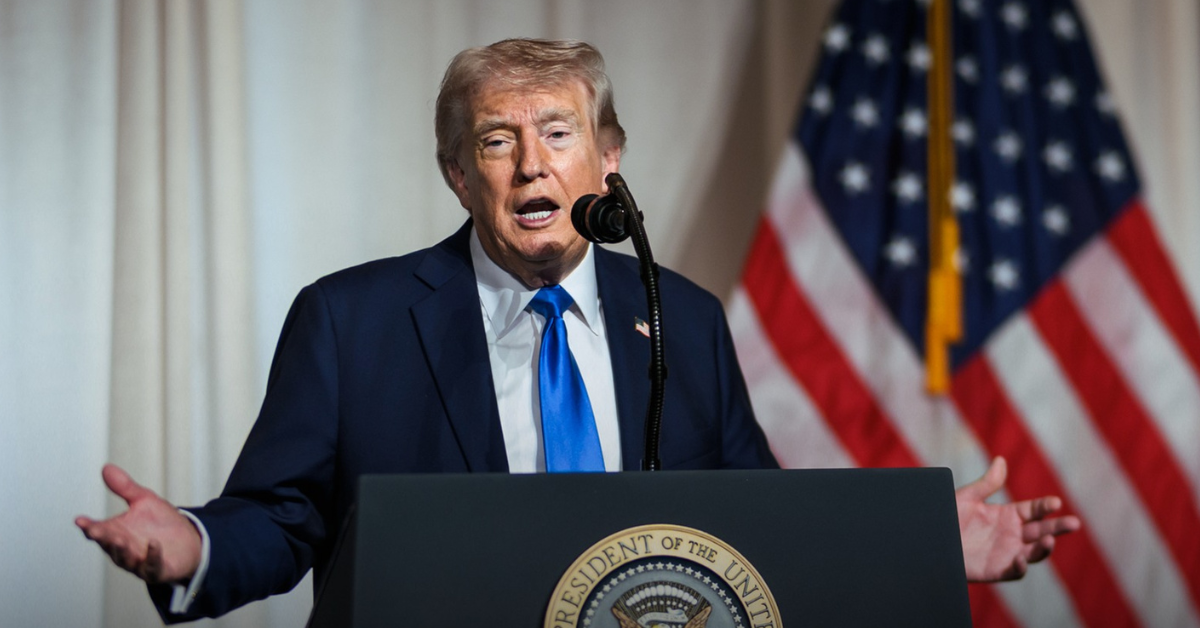
U.S. President Donald Trump declared that a ceasefire with Iran has “terminated” hostilities, as he sought to justify continuing military actions without congressional approval.
In a letter to congressional leaders, Trump said there had been no exchange of fire since the ceasefire, asserting that “the hostilities that began on February 28, 2026, have terminated.”
Under the War Powers Resolution, a president may engage in military action for 60 days without congressional authorization, after which they must either seek approval, withdraw forces, or request a 30-day extension on grounds of military necessity.
The administration formally notified Congress 48 hours after the initial airstrikes, setting a May 1 deadline. As the cutoff approached, officials signaled the White House viewed the law as inapplicable, with Trump also describing it as unconstitutional, a stance echoed by past presidents but unresolved by the courts.
On the diplomatic front, Iran, through Pakistani mediators, submitted a new proposal for talks, according to Islamic Republic News Agency, but it was quickly rejected by Trump.
Trump argued that the ceasefire effectively extends the timeline under the law. However, congressional Democrats disputed this, saying the statute contains no provision allowing a ceasefire to pause the 60-day limit. They also pointed to the continued U.S. naval blockade on Iranian oil exports as evidence that hostilities persist.
Senator Jeanne Shaheen criticized the administration, calling the deadline “a clear legal threshold” and warning that the president still lacks a clear strategy to end the conflict.
In his letter, Trump acknowledged the war may not be over, describing Iran as a continuing “significant” threat to U.S. forces.
Republicans in Congress, who hold narrow majorities, have largely backed Trump and blocked efforts to curtail the conflict. Meanwhile, the war has killed thousands, caused billions in damage, and disrupted global energy markets, contributing to rising consumer prices.
Public opinion polls show declining support for the war ahead of the November elections, which will determine control of Congress.
While the U.S. Constitution grants Congress the power to declare war, presidents have historically conducted limited or short-term military operations without formal declarations, particularly in response to perceived immediate threats.
Trump recently received briefings on potential new strikes aimed at forcing Iran back to negotiations. If fighting resumes, analysts say the administration could argue this would trigger a new 60-day window under the law, a strategy used by previous presidents during intermittent conflicts since the post-Vietnam War era.