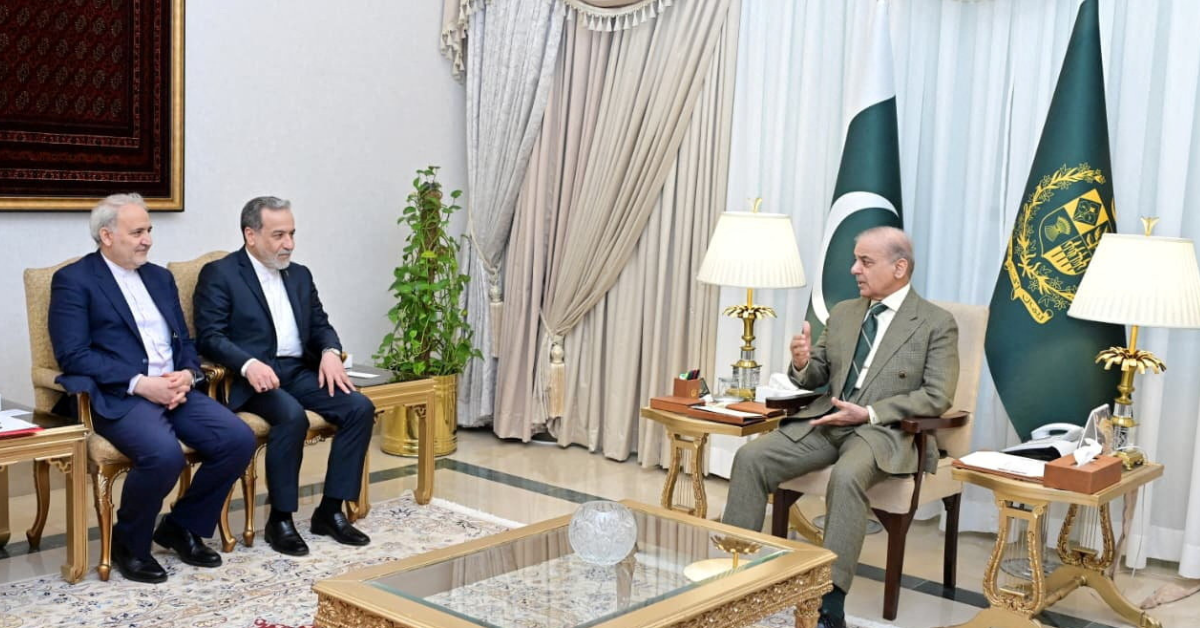
Iranian Foreign Minister Abbas Araqchi presented Iran’s key demands and concerns over US positions, as Pakistan intensified efforts to mediate an end to the conflict that has killed thousands and disrupted global energy markets.
Araqchi met with Pakistan Prime Minister Shehbaz Sharif and other senior officials in Islamabad before departing the capital under military jet escort, according to government sources. Details of the discussions were not disclosed.
The diplomatic push comes as tensions remain high between United States and Iran, with both sides at an impasse. Iran has largely shut down the Strait of Hormuz, a critical route for global oil and liquefied natural gas shipments while Washington continues to block Iranian oil exports.
The conflict began on February 28 following US-Israeli airstrikes on Iran. Since then, Tehran has launched retaliatory strikes against Israel, US bases, and Gulf states, driving energy prices to multi-year highs and fueling global inflation concerns.
In a statement, Araqchi said he conveyed Iran’s “principled positions” on the ceasefire and the need for a complete end to what he described as an imposed war. An Iranian diplomatic source said Tehran would not accept “maximalist demands” from Washington.
US Defense Secretary Pete Hegseth earlier said Iran still had an opportunity to reach a “good deal” if it abandons its nuclear weapons ambitions in a “meaningful and verifiable” way.
Despite mediation efforts, Iran has ruled out direct talks with the United States for now, with officials saying their positions would instead be relayed through Pakistan.
US President Donald Trump said Iran was expected to present an offer addressing US demands, though details remain unclear. The White House noted “some progress” in recent days and indicated Vice President JD Vance was prepared to join talks if needed.
Amid a fragile ceasefire, limited normalcy has begun to return. Flights resumed Saturday at Imam Khomeini International Airport after weeks of disruption caused by the conflict. Iranian airspace had been largely closed, forcing widespread flight cancellations and rerouting across the Middle East.
Global oil markets remain volatile. Prices surged this week, with Brent crude rising sharply amid uncertainty over negotiations. Shipping through the Strait of Hormuz has also plummeted, with only a handful of vessels passing daily compared to around 130 before the war.
Iranian officials maintain they are in control of the strategic waterway and warned of retaliation if US forces continue what they described as “blockade” actions.
Meanwhile, violence persists beyond Iran. In southern Lebanon, fresh Israeli airstrikes killed at least four people, according to state media, as clashes with Hezbollah continue despite a separate ceasefire extension brokered by Washington.
Tehran has signaled that a sustained ceasefire in Lebanon is a key condition for broader negotiations, underscoring the complex regional dynamics complicating efforts to end the war.