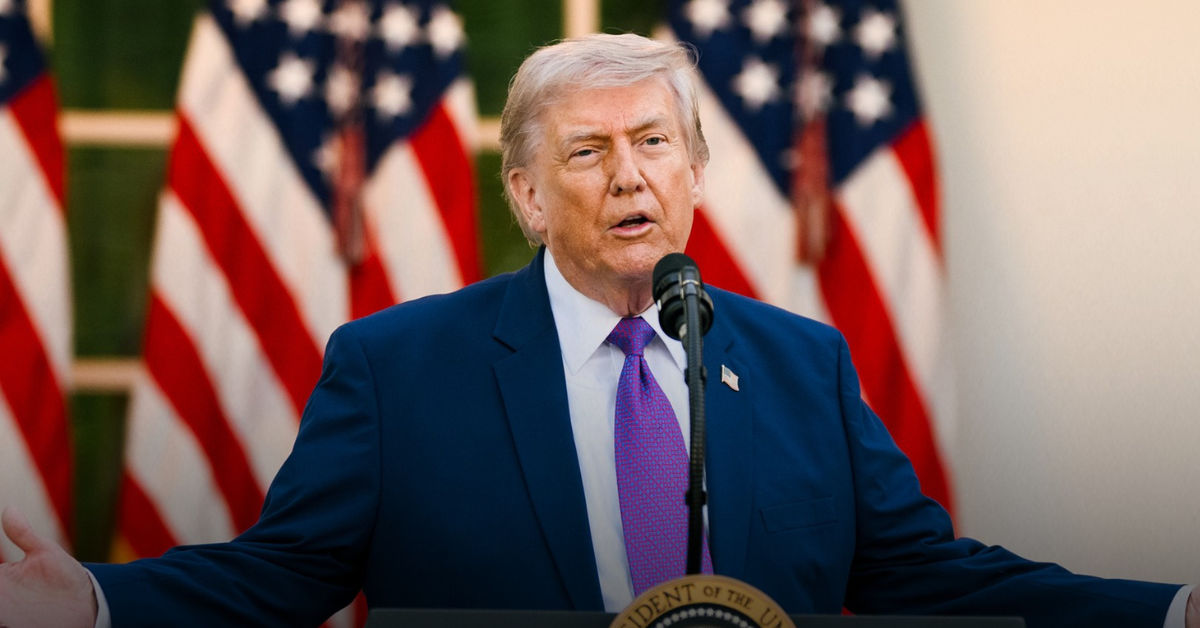
U.S. President Donald Trump said he would soon decide whether to approve a proposed agreement extending the ceasefire between the United States and Iran, although significant disagreements remain between the two sides.
Speaking at the White House, Trump said he would meet with senior officials in the Situation Room to make a “final determination” on a proposal that would extend the early-April truce by another 60 days, allowing negotiators more time to pursue a permanent settlement.
A White House official confirmed the meeting lasted approximately two hours but declined to say whether a decision had been reached.
“President Trump will only make a deal that is good for America and satisfies his redlines. Iran can never possess a nuclear weapon,” the official said.
An Iranian source familiar with the negotiations told Reuters that an agreement was close but had yet to receive final approval.
Despite signs of progress, major sticking points remain. Trump insisted that Iran must permanently abandon any pursuit of nuclear weapons and reopen the Strait of Hormuz to unrestricted international shipping.
“Iran must agree that they will never have a Nuclear Weapon or Bomb. The Hormuz Strait must be immediately open, no tolls, for unrestricted shipping traffic, in both directions,” Trump said.
Iran, however, rejected Trump’s characterization of the negotiations. The semi-official Fars News Agency described the remarks as an attempt to project a “fabricated victory.”
According to Iranian officials, the proposed agreement does not include nuclear-related commitments. Foreign Ministry spokesperson Esmaeil Baghaei said decisions regarding management of the Strait of Hormuz should be made by Iran and Oman.
Fars reported that Tehran would reopen the strategic waterway under its own conditions once the United States lifts restrictions on Iranian shipping. U.S. Treasury Secretary Scott Bessent said any easing of the blockade would be gradual.
The Iranian news agency also reported that negotiators had discussed the release of $12 billion in frozen Iranian assets. Trump, however, said no money would be exchanged “until further notice,” potentially referring to ongoing disputes over compensation, shipping tolls, or frozen funds.
Financial markets reacted positively to reports of a potential agreement, with oil prices falling and stock markets rising.
Trump faces mounting pressure to restore access through the Strait of Hormuz and ease fuel prices ahead of November’s congressional elections. At the same time, he risks criticism from hardliners within his own party who oppose concessions to Tehran.
The conflict, launched by the United States and Israel on February 28, has resulted in thousands of deaths, primarily in Iran and Lebanon, while disruptions in the Strait of Hormuz have contributed to higher global energy prices.
In a post on Truth Social, Trump suggested progress was being made toward reopening the waterway.
“Mines will be removed from the strait,” Trump wrote, adding that vessels stranded in the area may soon be able to return home.