
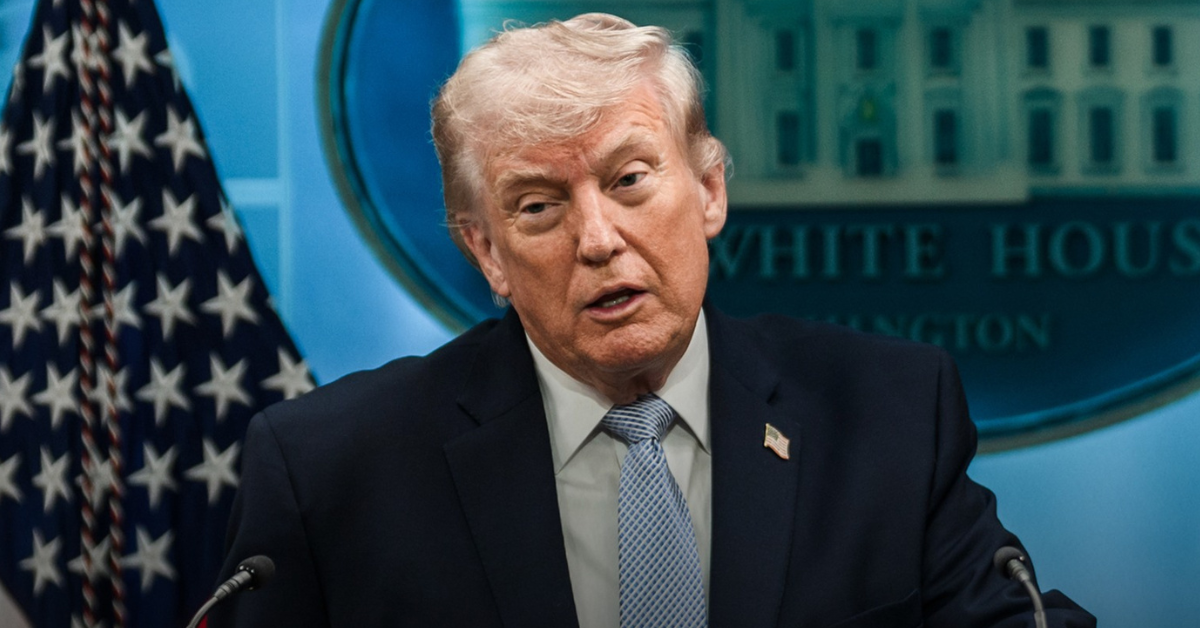
US President Donald Trump called off a planned visit by US officials to Pakistan for talks related to the ongoing conflict with Iran, shortly after Tehran’s delegation departed Islamabad.
Trump said sending special envoy Steve Witkoff and his son-in-law Jared Kushner would waste “too much time,” adding that if Iran wanted negotiations, “all they have to do is call.”
Earlier, Iranian Foreign Minister Abbas Aragchi met with Pakistani mediators, saying he had presented Tehran’s position on ending the war but remained uncertain whether Washington was “truly serious about diplomacy.”
Diplomatic efforts have faltered despite Trump extending a ceasefire that was set to expire on April 22 to allow more time for negotiations.
Tensions between the two sides remain high, particularly over the Strait of Hormuz, where Iran has restricted passage following US and Israeli strikes launched in February, as well as over Tehran’s nuclear program. The United States has since increased its naval presence in the area to curb Iranian oil exports through the vital shipping route, which carries about a fifth of global oil supply.
While the White House earlier said Iran was open to talks, Tehran denied plans for direct engagement. Trump, however, maintained that the ceasefire would hold, even as prospects for face-to-face negotiations dim.
Asked whether the cancelled trip signaled a resumption of hostilities, Trump told local news: “No, it doesn’t mean that. We haven’t thought about it yet.”
In a post on Truth Social, Trump cited “tremendous infighting and confusion” within Iran’s leadership, claiming “nobody knows who is in charge.”
The White House had earlier indicated that Vice President JD Vance was on standby to join the talks if progress had been made, though his absence from the planned delegation suggested expectations for a breakthrough were limited.
Iranian President Masoud Pezeshkian reiterated Tehran’s openness to dialogue but said “breach of commitments, blockade and threats” continued to hinder meaningful negotiations.
Pakistan has played a mediating role in recent weeks, including facilitating earlier talks between US and Iranian officials on April 11 that ended without agreement. Aragchi described his visit as “fruitful,” noting he had outlined a potential framework to permanently end the war, but stressed uncertainty over US commitment to diplomacy.
Prime Minister Shehbaz Sharif said discussions with the Iranian official were “warm” and “cordial,” focused on the broader regional situation.
The conflict was initially driven by US and Israeli concerns over Iran’s nuclear ambitions, with both countries suspecting Tehran of pursuing nuclear weapons. Iran has consistently denied the allegation, insisting its nuclear program is for civilian energy purposes despite enriching uranium close to weapons-grade levels.
Meanwhile, violence persisted elsewhere in the region. At least four people were reported killed in Israeli airstrikes in southern Lebanon on Saturday, according to state media, after the Israeli military accused Hezbollah of launching rockets into Israel.
Despite an existing ceasefire between Israel and the Iran-backed group, both sides have continued to exchange fire, accusing each other of violating the agreement. Israeli Prime Minister Benjamin Netanyahu has ordered intensified military operations targeting Hezbollah positions in Lebanon.