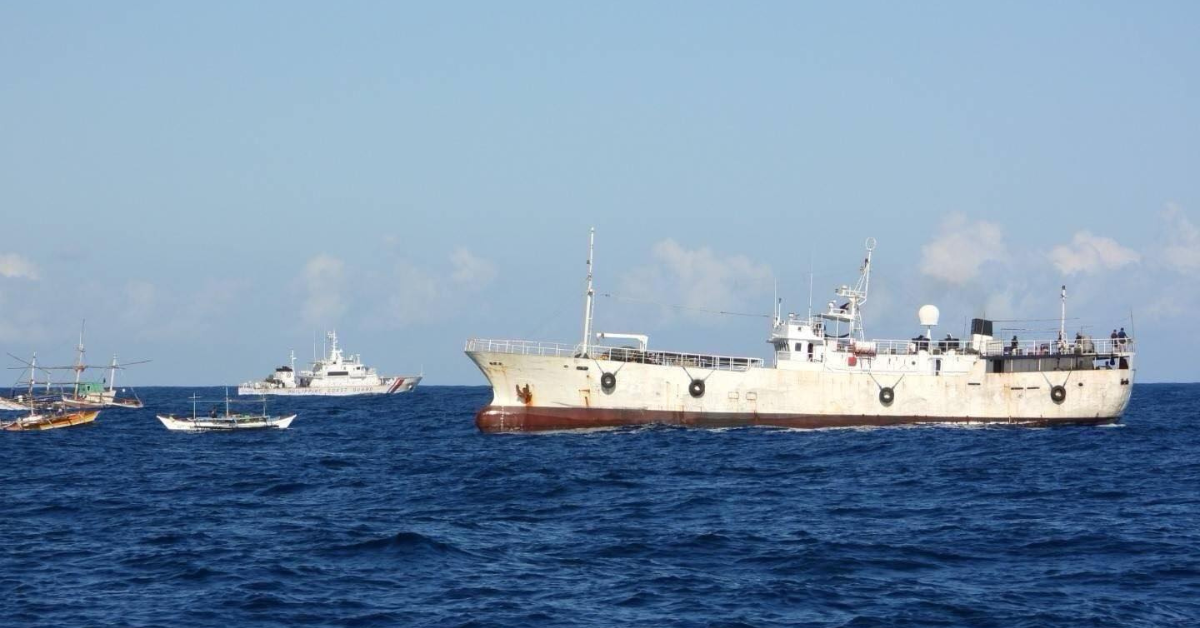
Philippine security officials said that cyanide was discovered on Chinese boats operating near a disputed atoll in the South China Sea, raising fresh tensions in the long-standing maritime row.
Authorities said laboratory tests confirmed the presence of the highly toxic substance in bottles seized by the Philippine Navy during operations at Second Thomas Shoal last year.
Officials warned the cyanide could severely damage marine life and weaken the reef surrounding a grounded Philippine naval vessel stationed at the atoll to reinforce Manila’s maritime claim.
“We wish to underscore that the use of cyanide in Ayungin Shoal is a form of sabotage that seeks to kill local fish populations, depriving Navy personnel of a vital food source,” said National Security Council spokesperson Cornelio Valencia, using the Philippine name for the feature.
He added that the substance could also harm the reef structure and “ultimately compromise” the stability of the grounded ship.
China’s Foreign Ministry dismissed the allegations, calling them a “stunt,” and accused the Philippines of harassing Chinese fishing vessels and seizing supplies from fishermen.
“The Philippine side illegally harassed the Chinese fishing boats conducting normal fishing… There is no credibility whatsoever to their story,” said spokesperson Guo Jiakun.
Second Thomas Shoal—known locally as Ayungin Shoal—is located within the Philippines’ exclusive economic zone in the West Philippine Sea and lies about 1,300 kilometers from mainland China, which claims it as part of its territory.
Tensions between the two countries have escalated in recent years, particularly over resupply missions to Filipino troops stationed on a grounded warship. A June 2024 confrontation turned violent, leaving a Filipino sailor injured, though China has denied any aggressive actions.
Despite disputes, both sides have recently engaged in talks exploring potential maritime cooperation and confidence-building measures, though the Philippines stressed that such cooperation remains limited and excludes sensitive operational areas.
The South China Sea remains one of the world’s most contested waterways, with overlapping claims from China, the Philippines, Vietnam, Malaysia, Brunei, and Taiwan. A 2016 international arbitration ruling invalidated China’s sweeping claims, a decision Beijing continues to reject.