
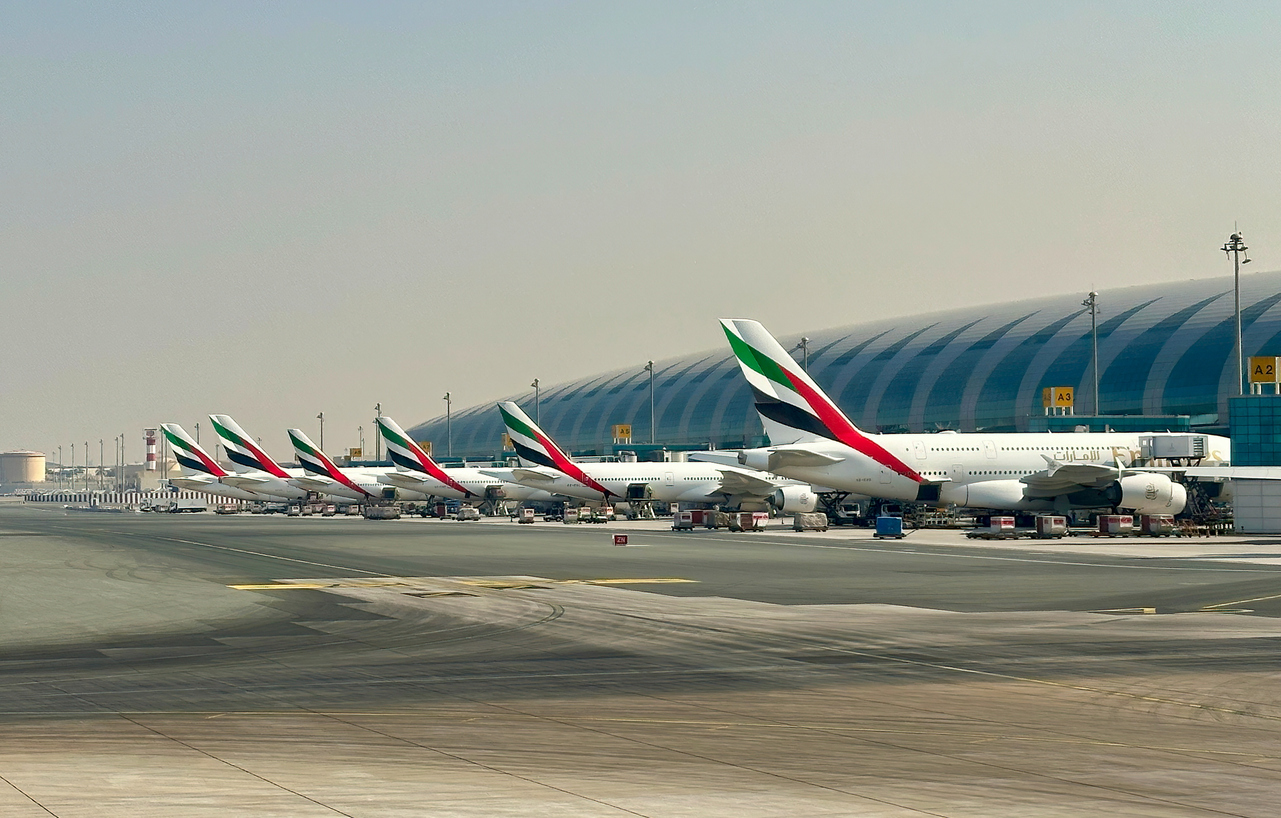
Dubai International Airport ranked as the world’s busiest airport for scheduled international seat capacity in July 2026, maintaining its lead as global demand for long-haul travel continues to recover.
Data released by UK-based aviation analytics firm OAG showed Dubai International Airport offering 4.35 million scheduled international seats during the month, the highest among airports worldwide.
London Heathrow ranked second with 4.23 million international seats, followed by Amsterdam Schiphol with 3.82 million, Incheon International Airport with 3.75 million, and Paris Charles de Gaulle Airport with 3.70 million.
Dubai’s international seat capacity increased 18% from the same period last year, reflecting continued expansion in international connectivity and airline operations.
The latest ranking follows Dubai’s strong performance earlier this year. The airport also topped OAG’s global rankings in January and February 2026, surpassing Hartsfield-Jackson Atlanta International Airport in scheduled seat capacity.
On an annual basis, Dubai retained its position in 2025 as the world’s busiest airport for international passenger traffic by seat capacity, with 62.4 million seats, a 4% increase from the previous year.
Dubai Airports also reported handling a record 95.2 million passengers in 2025, marking the highest annual passenger traffic in the airport’s history.
The growth has continued into 2026, with the airport serving 18.6 million passengers during the first quarter as airlines expanded operations and regional airspace conditions improved.
Airport authorities attributed the sustained growth to expanded airline capacity and continued investments in digital infrastructure designed to speed up passenger processing.
Among the initiatives introduced are a pre-travel eligibility verification tool for smart gates, biometric immigration systems using facial and iris recognition, and the “Red Carpet” seamless travel corridor, which allows multiple passengers to complete passport clearance simultaneously.
Dubai Airports has also expanded services such as off-site baggage check-in, real-time baggage tracking, digital wayfinding and dedicated priority lanes for families and people of determination as part of its strategy to strengthen its position as a global aviation hub.
 Staff Report22 mins ago