
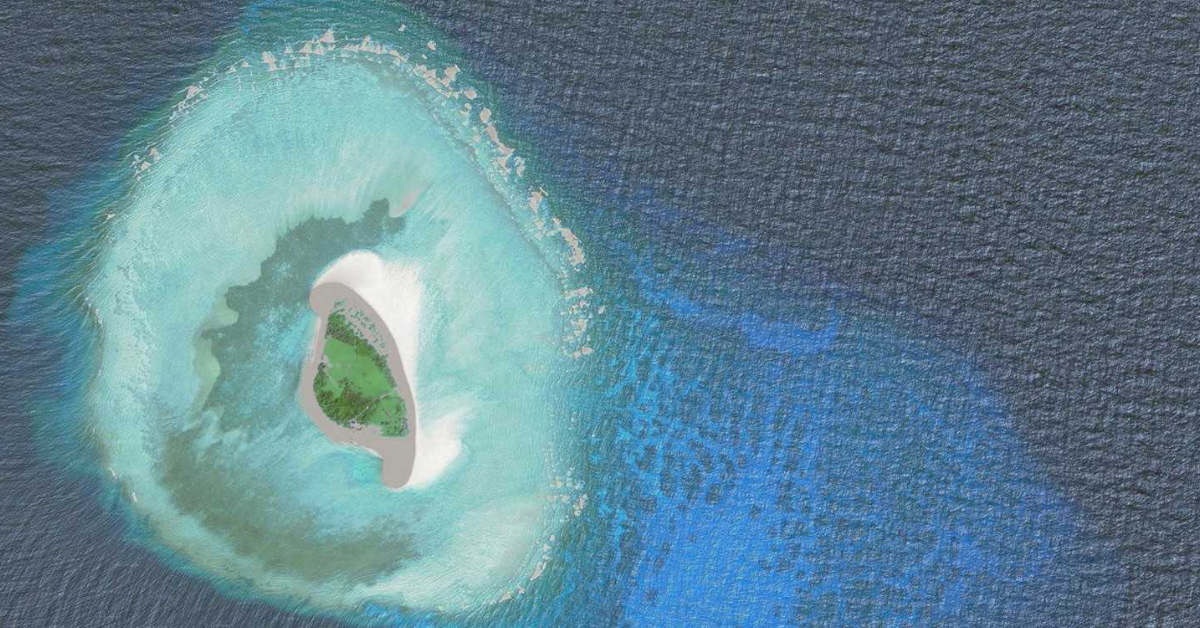
China has expressed strong opposition to the Philippines’ decision to assign local names to more than 100 features in the Kalayaan Island Group in the West Philippine Sea, warning that Beijing would take “necessary measures” to defend what it calls its territorial rights.
Chinese Foreign Ministry spokesperson Mao Ning said Beijing “firmly opposes” any move that it believes undermines China’s sovereignty in the disputed waters.
Mao accused the Philippines of “illegally delineating” the Kalayaan Island Group beyond its territorial scope, insisting that the features are part of the Spratly Islands, which China refers to as “Nansha Qundao.”
“The so-called naming of relevant islands and reefs in China’s Nansha Qundao violates China’s territorial sovereignty and goes against the UN Charter and relevant international laws,” Mao said during a regular press conference.
“China will do what is necessary to firmly defend its territorial sovereignty and maritime rights and interests in the South China Sea,” she added.
China’s remarks came after President Ferdinand Marcos Jr. signed Executive Order No. 111 directing government agencies to adopt standard Philippine names for 131 geographical features in the Kalayaan Island Group, part of the municipality of Kalayaan.
The order, signed on March 26, covers islets, reefs, shoals, atolls, sandbars and sand cays located in the West Philippine Sea.
Under the executive order, all national government agencies must use the Philippine names in official documents, maps and communications. The National Mapping and Resource Information Authority has also been directed to update and publish official charts reflecting the new names.
“It is imperative to adopt a standard set of Philippine names for the maritime features in the KIG for the efficient administration and governance of the area, and the exercise of the country’s sovereignty in the WPS,” the order stated, citing the National Maritime Council.
The Kalayaan Island Group lies in the western section of the disputed Spratly Islands and forms part of the Philippines’ West Philippine Sea. The Philippines first laid claim to the area in 1955 and occupied Pag-asa Island in the 1970s, where Filipino civilians and soldiers continue to live.