
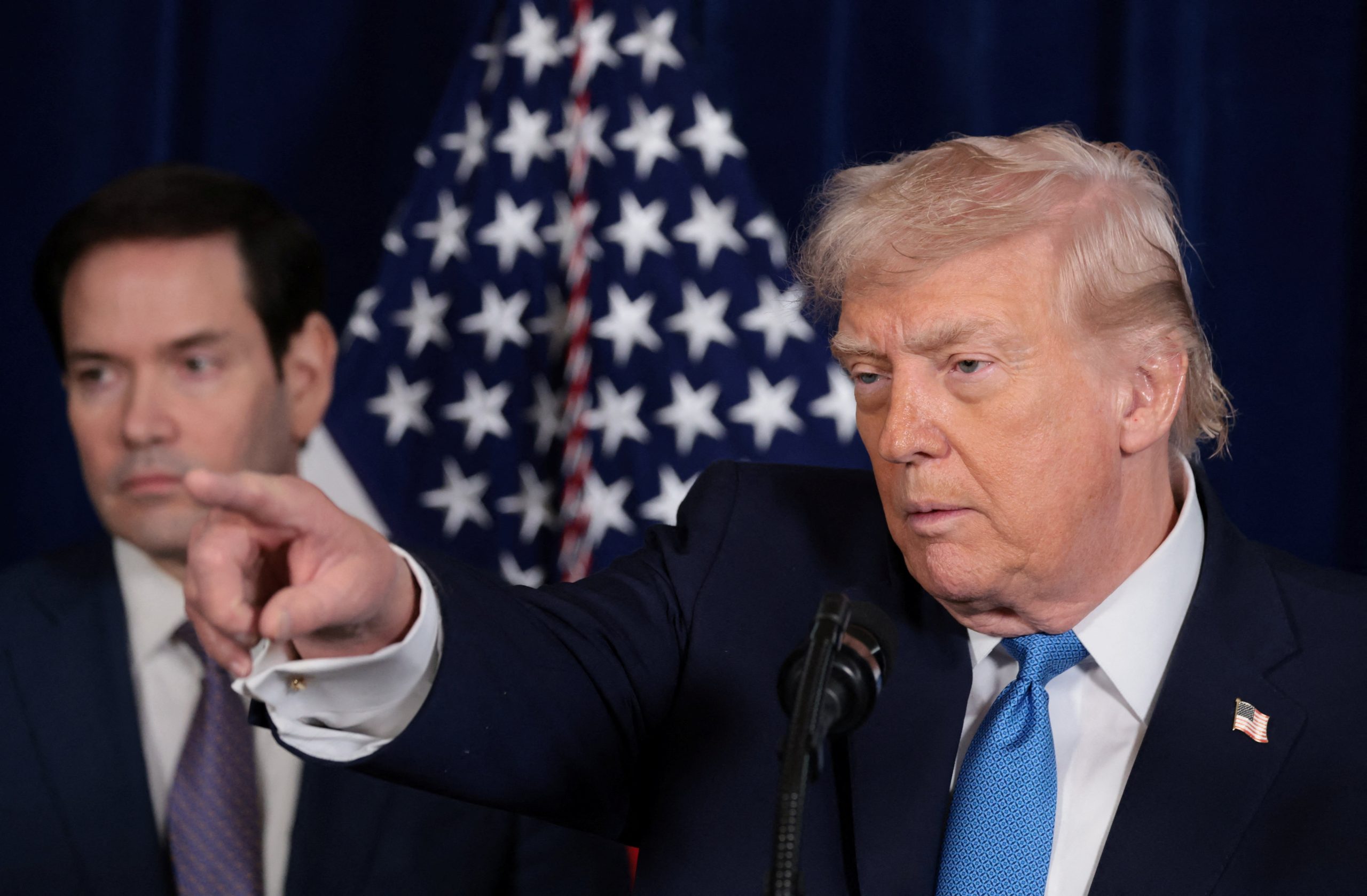
U.S. President Donald Trump and Iranian President Masoud Pezeshkian have signed an agreement aimed at ending months of conflict between the United States, Israel and Iran, opening the door to broader negotiations on Tehran’s nuclear program and the reopening of the Strait of Hormuz.
Trump signed the memorandum of understanding during a meeting with French President Emmanuel Macron following the Group of Seven summit in France, while Iranian officials confirmed that President Pezeshkian also signed the document.
“Just signed it,” Trump told reporters after the ceremony.
Iranian Foreign Ministry spokesperson Esmaeil Baqaei said the agreement had been finalized with the signatures of both presidents.
The accord seeks to end a conflict that began in late February and triggered missile and drone attacks across the region, disrupting global energy markets and leading to the closure of the Strait of Hormuz, a critical shipping route for oil exports.
Under the agreement, the United States will immediately ease oil sanctions on Iran. Washington also pledged to facilitate a proposed $300 billion reconstruction fund backed by regional countries once a broader agreement on Iran’s nuclear program is reached.
Iran, meanwhile, agreed to dilute its stockpile of enriched uranium under the supervision of the International Atomic Energy Agency as part of confidence-building measures during a two-month negotiation period.
“Now it is time to test the implementation of the agreement,” Baqaei said.
Despite the breakthrough, major issues remain unresolved, including the long-term future of Iran’s nuclear activities and the full lifting of sanctions.
Trump warned that military action remains an option should Iran violate the agreement.
The deal has drawn mixed reactions. Iranian officials described it as a victory for Tehran, while some U.S. lawmakers criticized the agreement, arguing it does not sufficiently curb Iran’s nuclear ambitions.
The agreement also includes efforts to reopen the Strait of Hormuz, a move closely watched by global markets due to its importance to international energy supplies.
Negotiations between Washington and Tehran are expected to continue over the next two months as both sides seek a more comprehensive and permanent settlement.